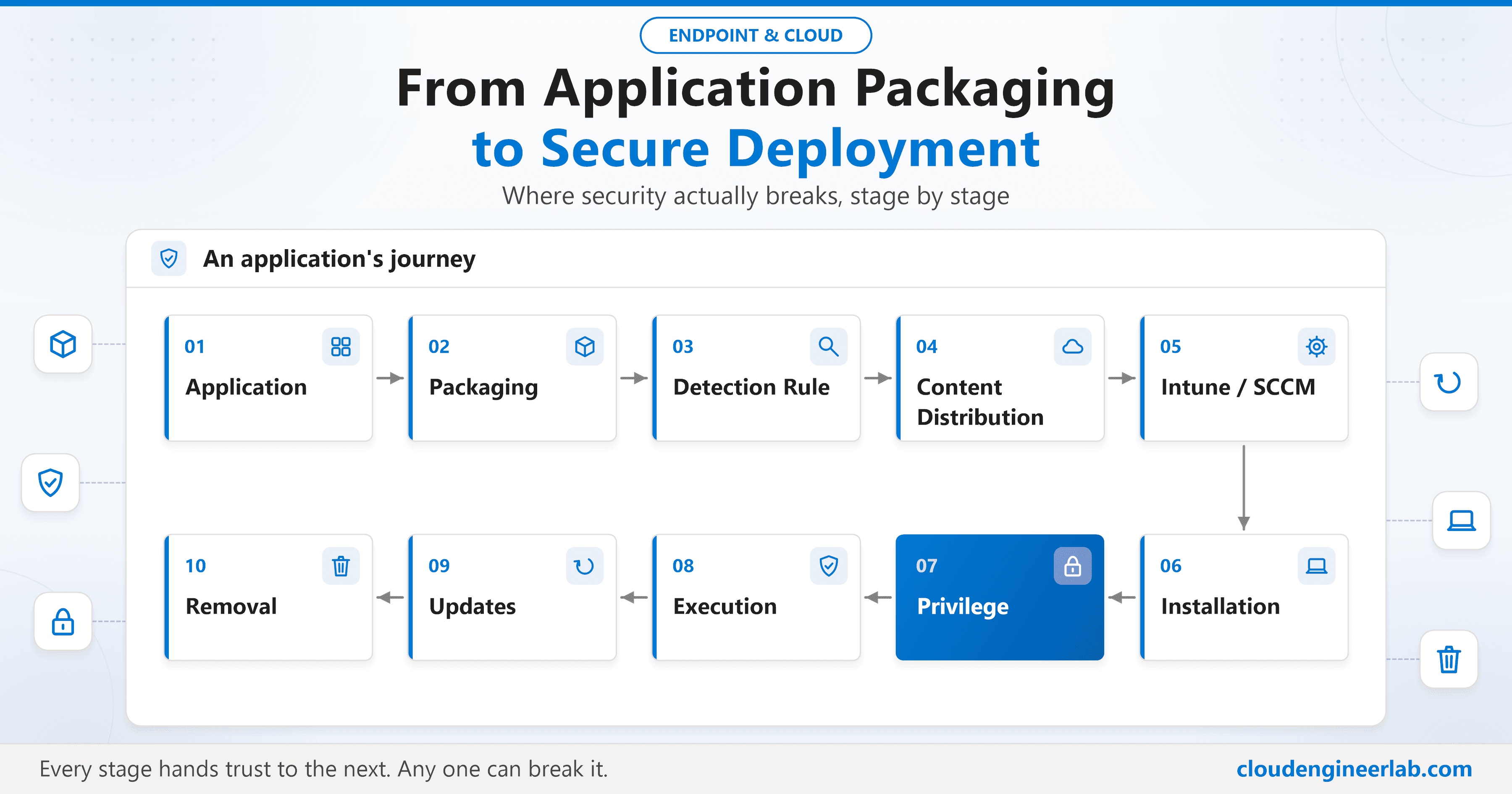
From Application Packaging to Secure Deployment: Where Security Actually Breaks
Follow one app from source to removal and see where security breaks: secrets in packages, fakeable detection, SYSTEM installs, writable folders and zombie apps.
Engineering blog
145 deep-dives on Azure, Intune, AI Automation & Cloud Engineering.

Follow one app from source to removal and see where security breaks: secrets in packages, fakeable detection, SYSTEM installs, writable folders and zombie apps.

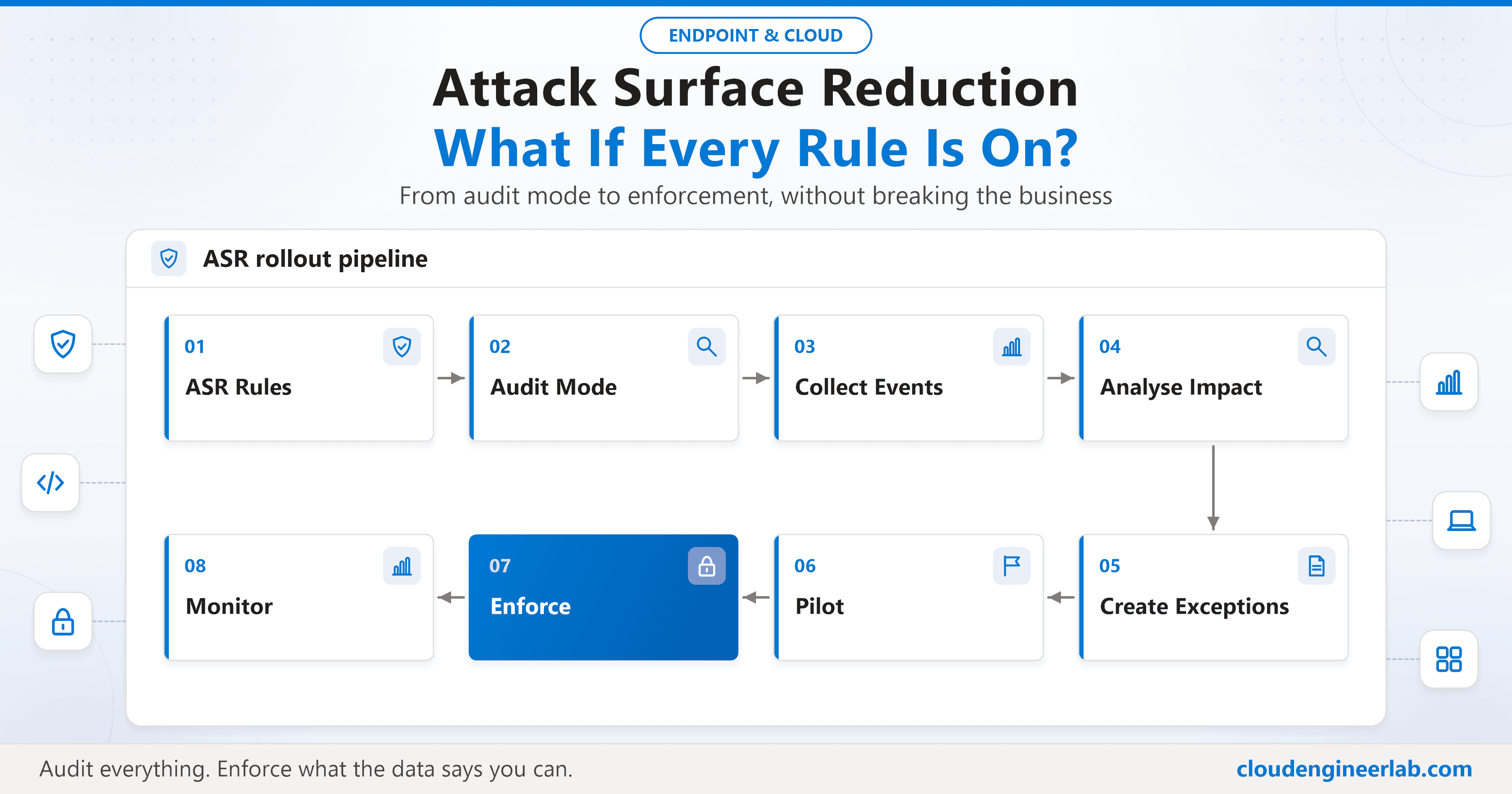
Every ASR rule on at once: what lights up in audit, what breaks Office, PowerShell, developer machines and line-of-business apps, and how to reach Block safely.


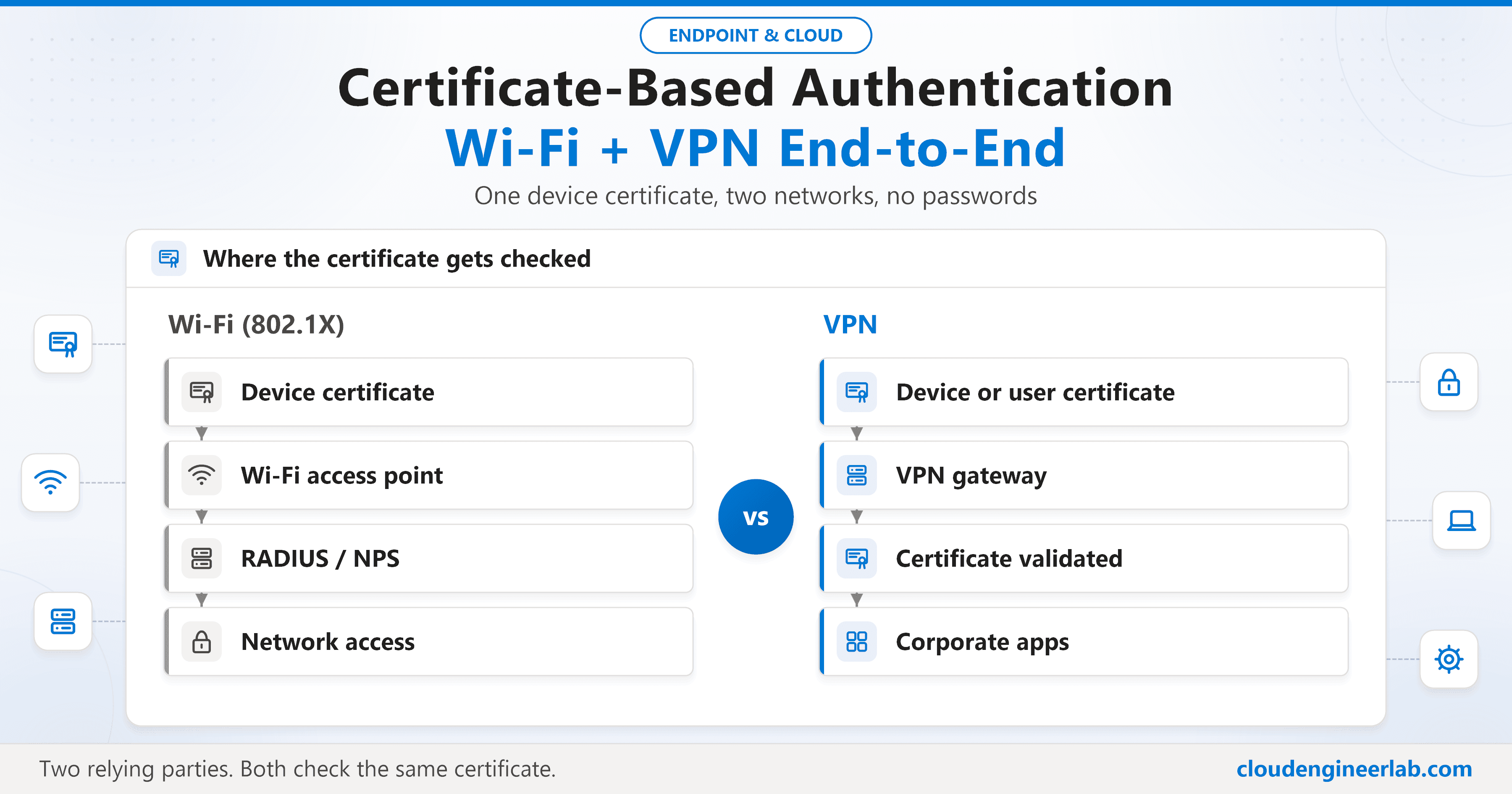
What happens after the certificate lands: device vs user certificates, 802.1X, RADIUS and NPS, VPN authentication, EKUs, trust chains and troubleshooting.

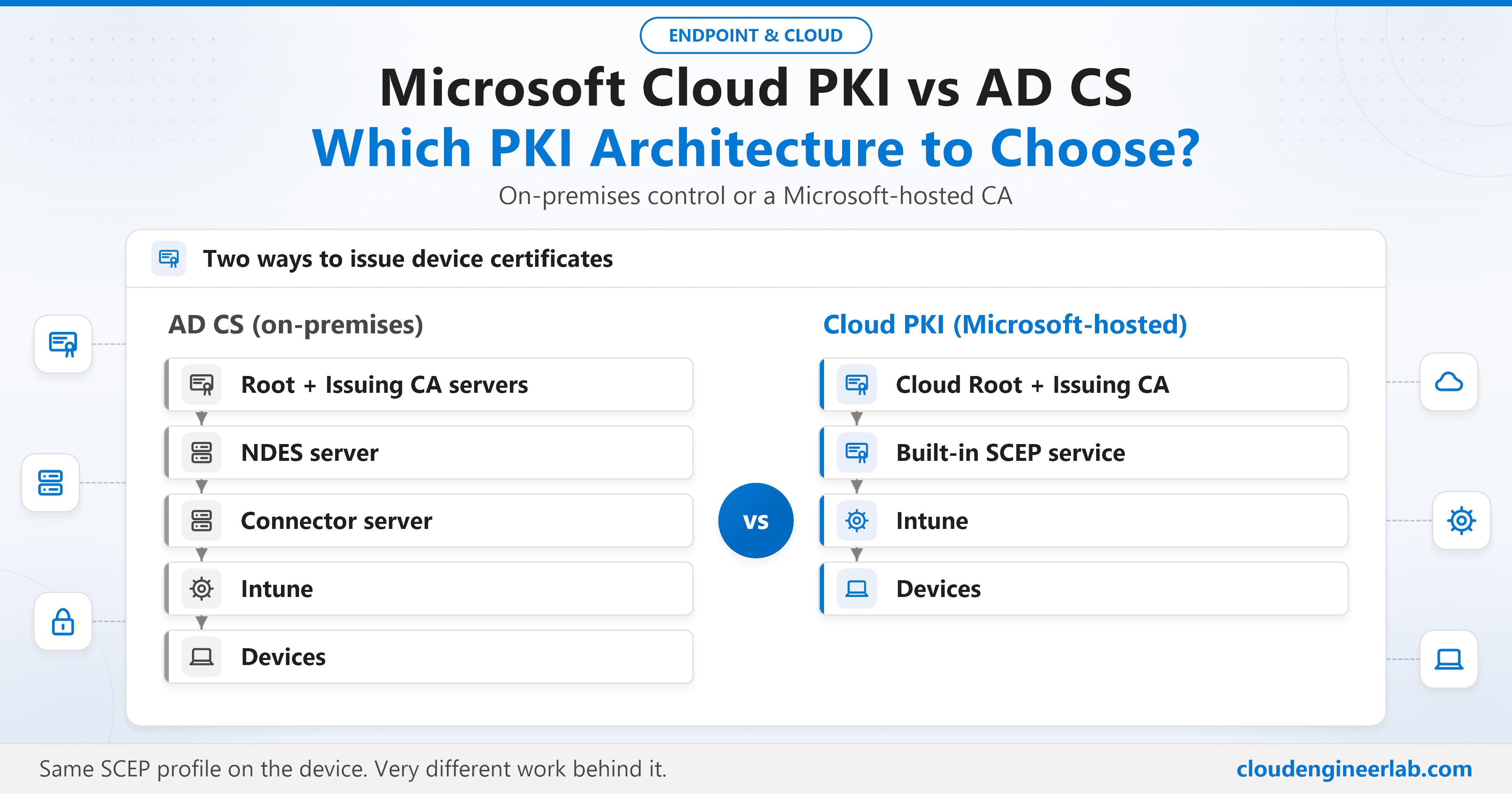
Cloud PKI removes the on-premises CA, NDES and the connector. AD CS can issue to anything. A practical comparison, and a guide to choosing, combining or moving.

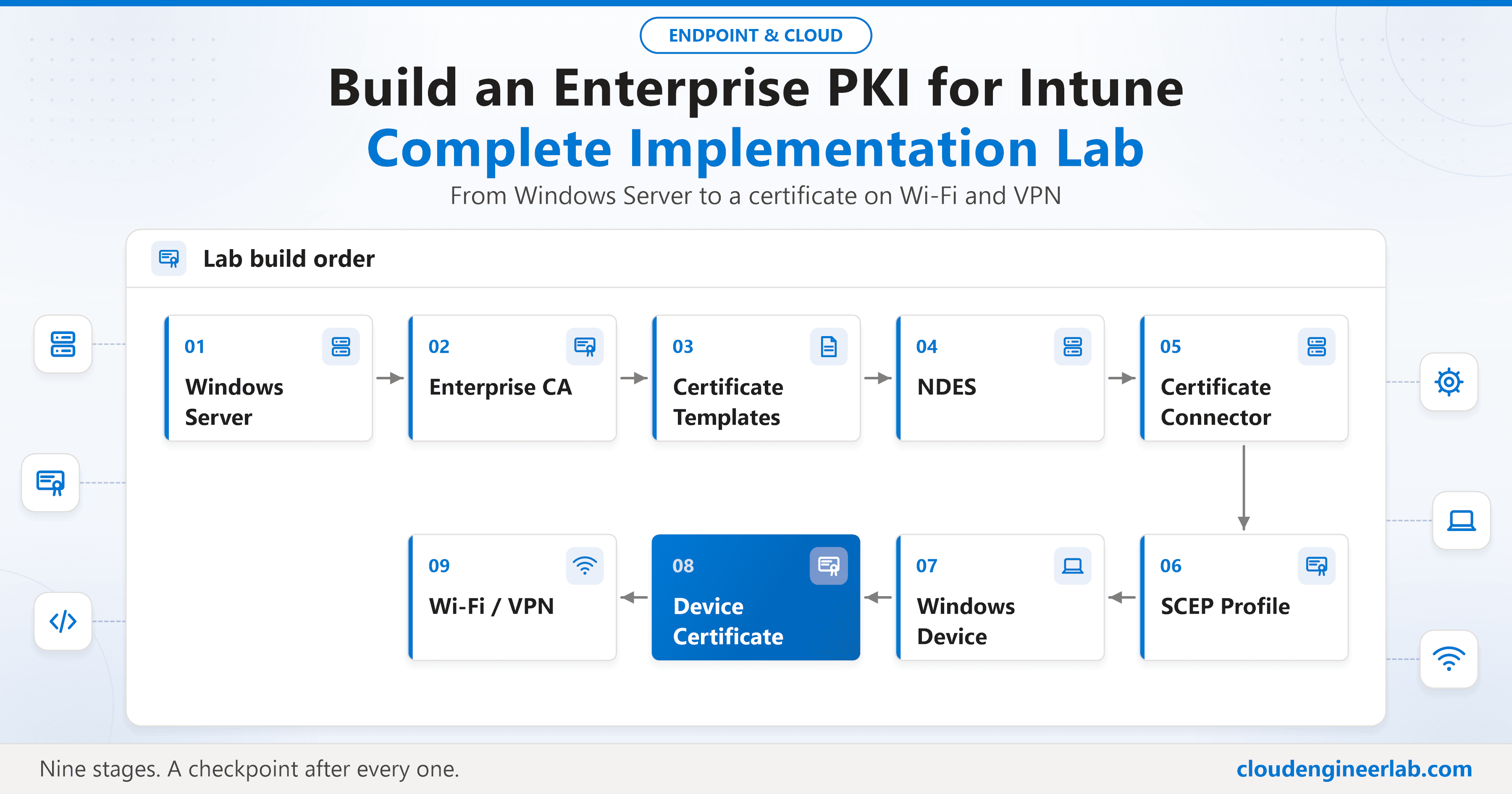
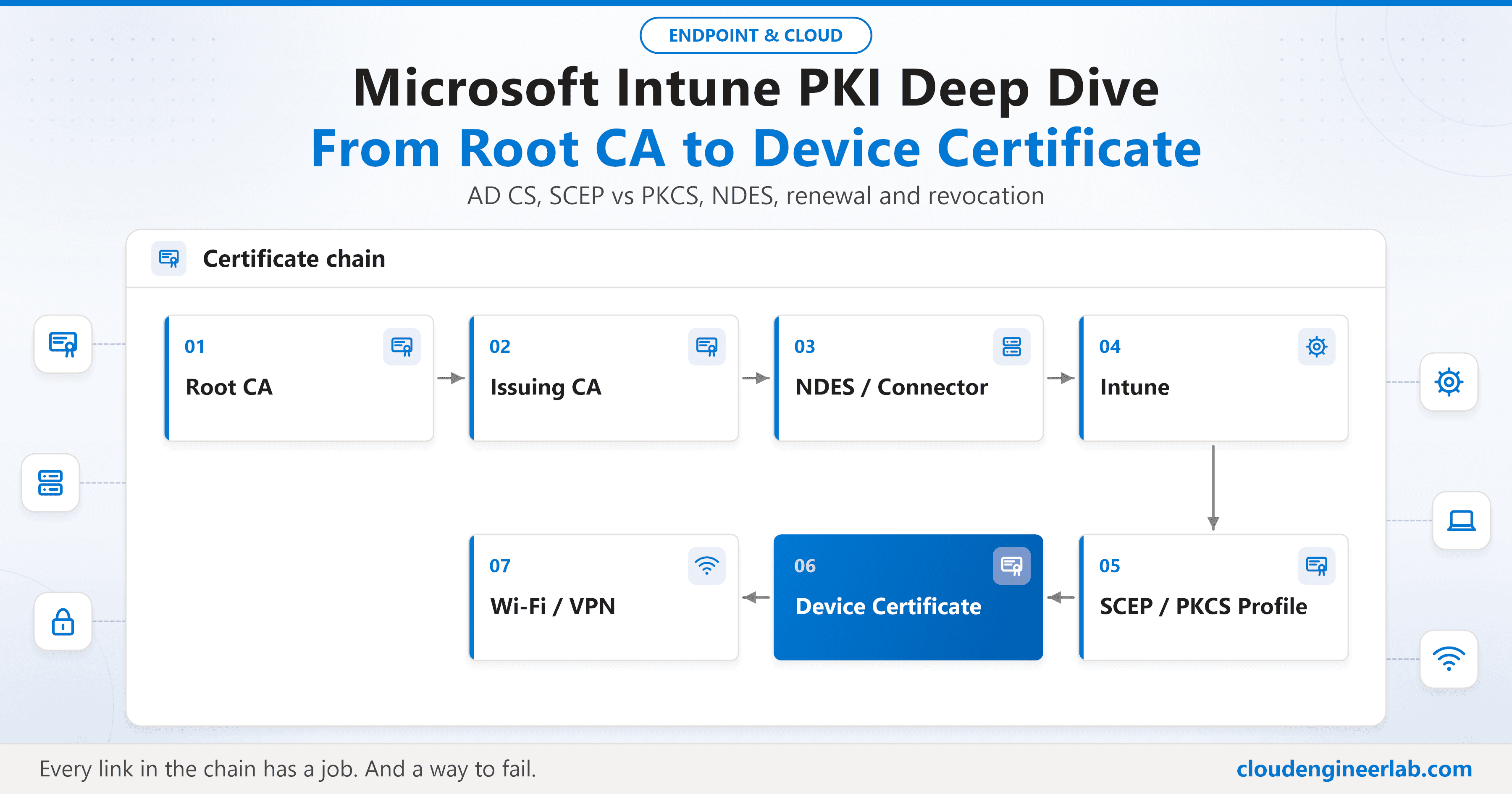
How a certificate gets from your Root CA onto an Intune-managed device: AD CS, templates, SCEP vs PKCS, NDES, the Certificate Connector, renewal and revocation.

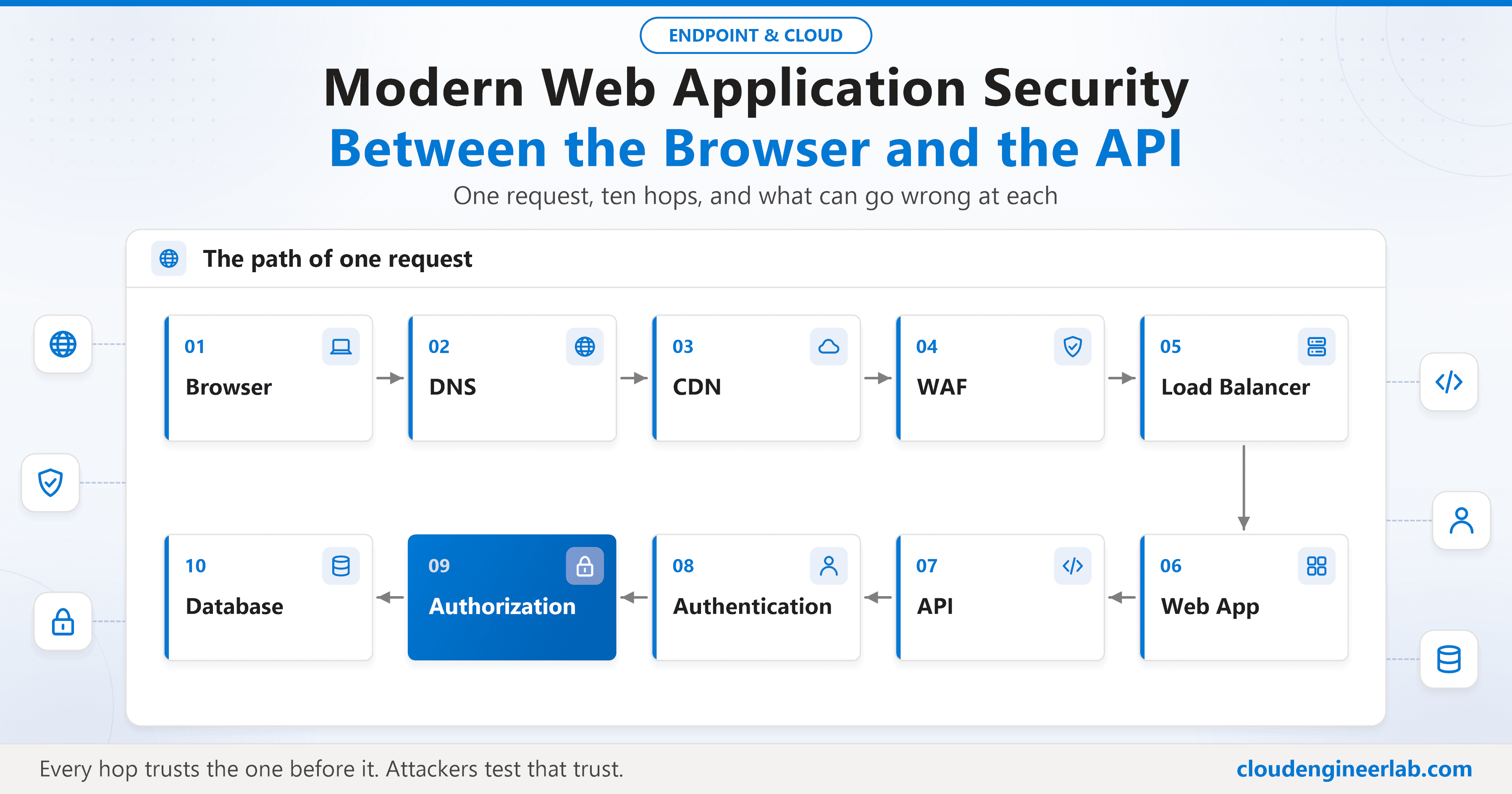
Follow one request through DNS, CDN, WAF, load balancer, app, API, authentication, authorization and database, and the security controls that matter at each.

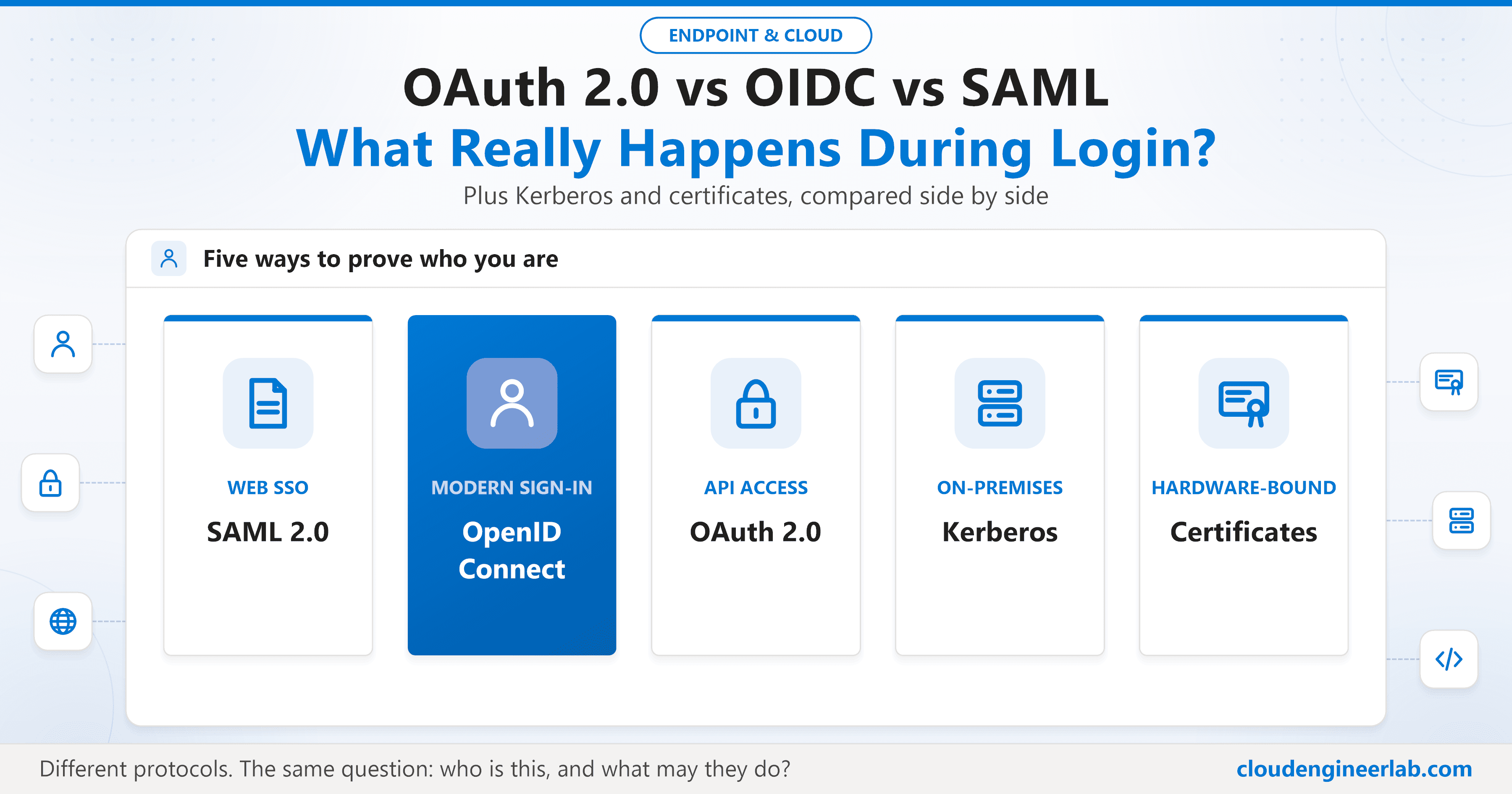
Step through a real login with SAML, OpenID Connect and OAuth 2.0, then compare them with Kerberos and certificate authentication, and learn which to use when.

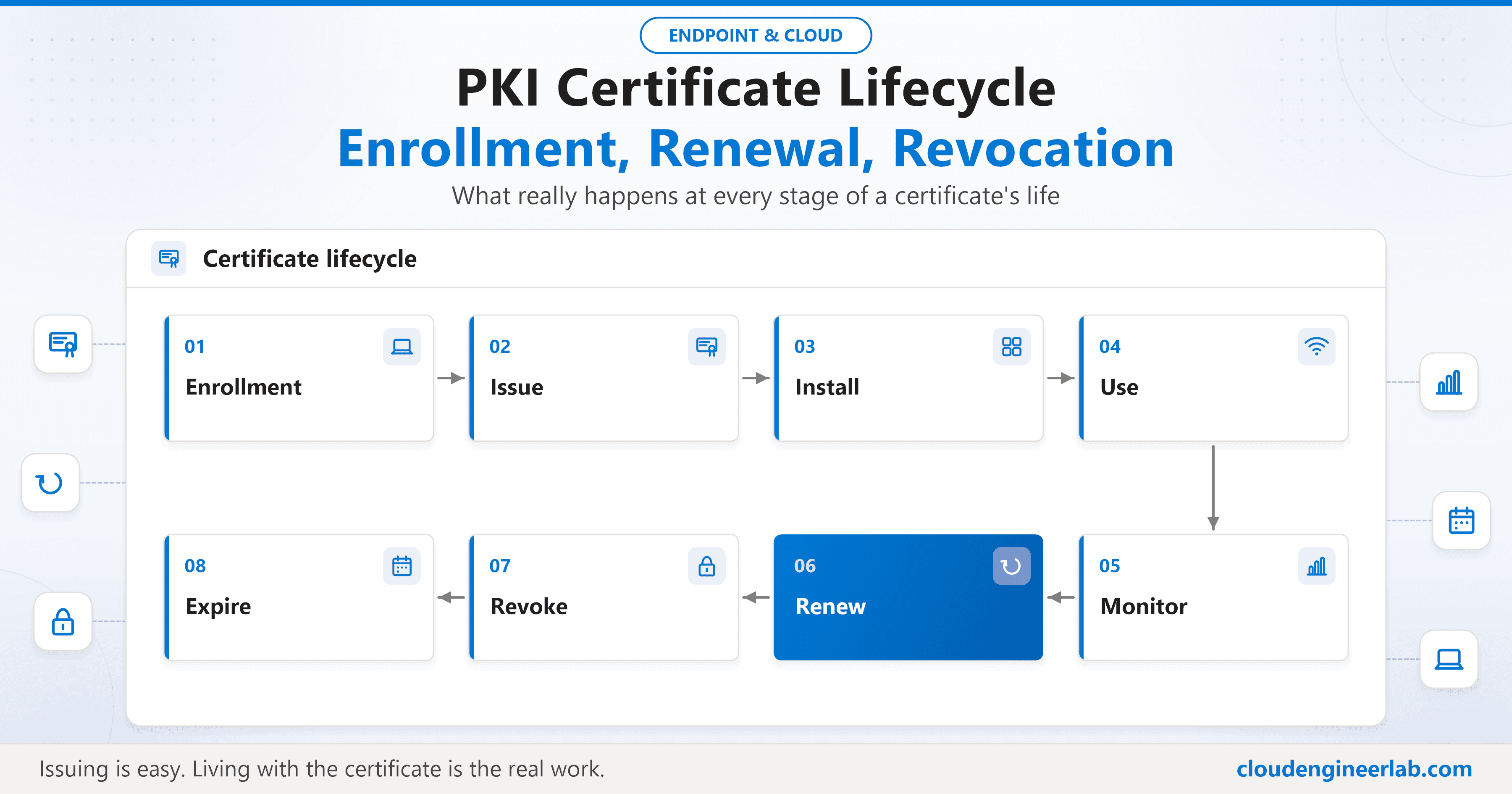
What happens when a certificate expires, a device is deleted or a user leaves: renewal thresholds, failed renewals, revocation timing, CRL vs OCSP.

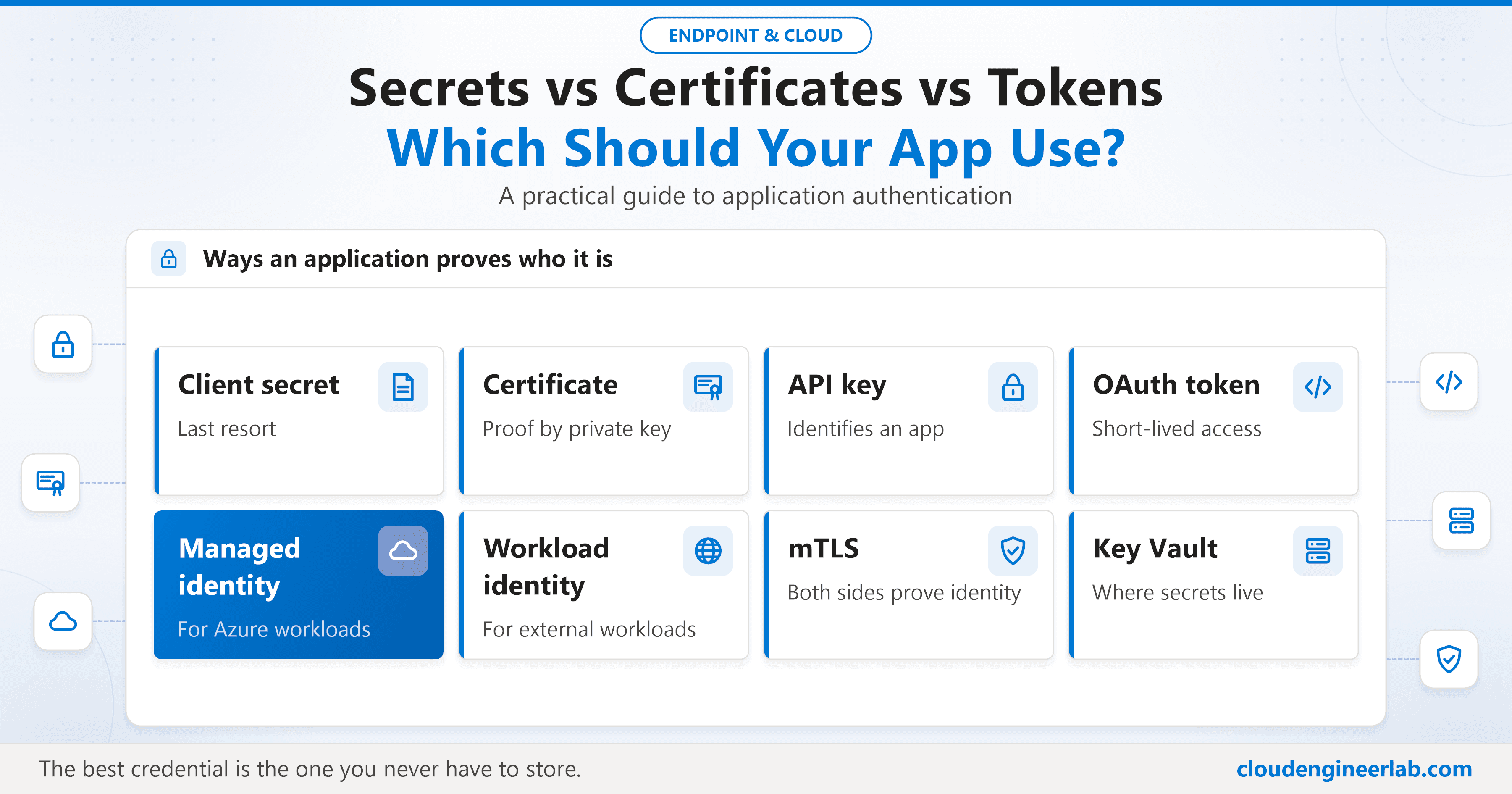
Client secret, certificate, API key, OAuth token, managed identity, workload identity or mTLS? A practical guide to how applications should prove who they are.

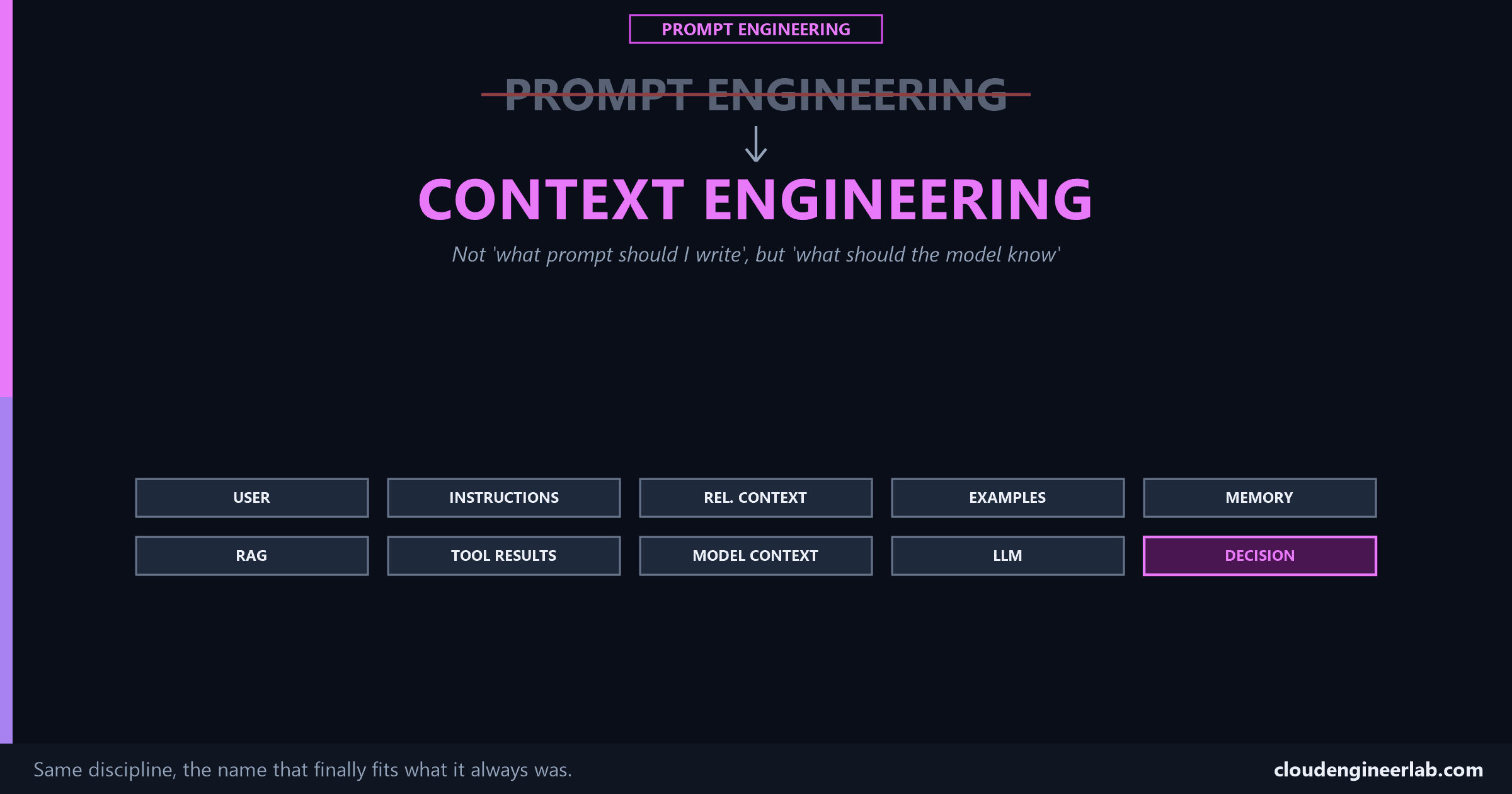
The field stopped asking 'what prompt should I write' and started asking 'what should the model know at the moment it decides.' Same eighteen posts, one honest rename.

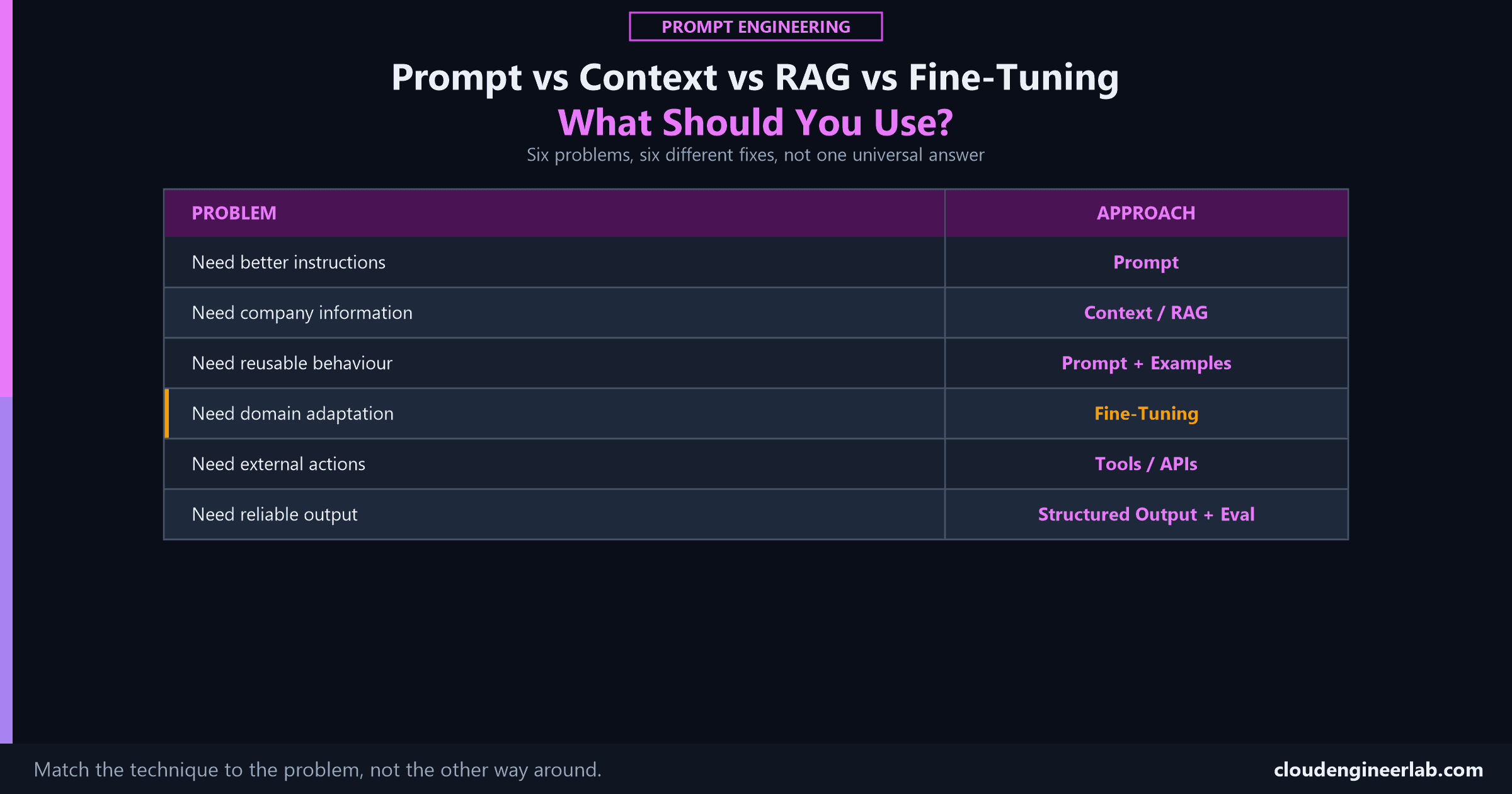
Six different problems get mistaken for each other constantly, and each one has a specific, usually cheaper fix than the one people reach for first.

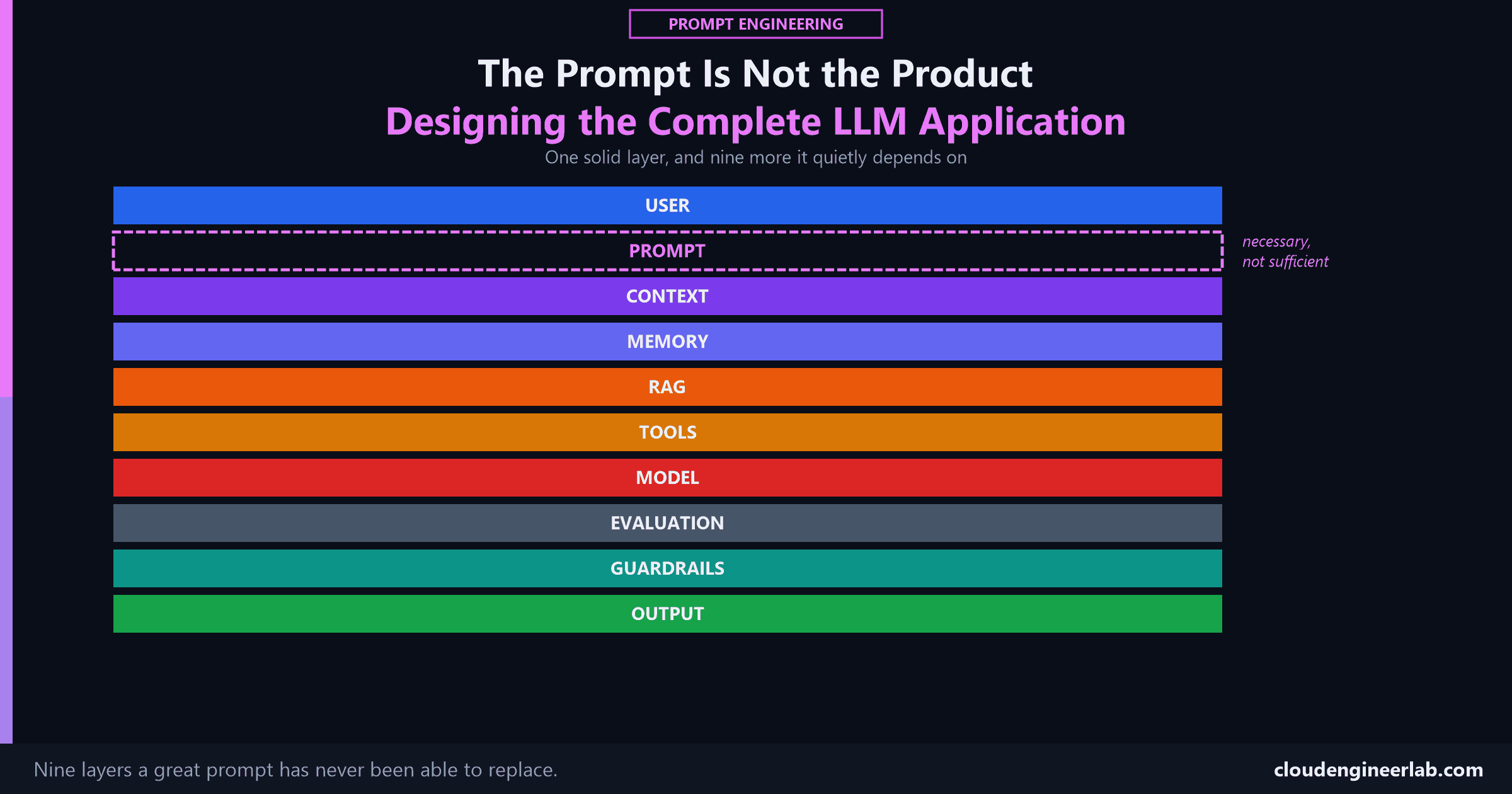
A perfect prompt run with no context, no memory, no evaluation, and no guardrails still fails in production, for reasons that have nothing to do with its wording.

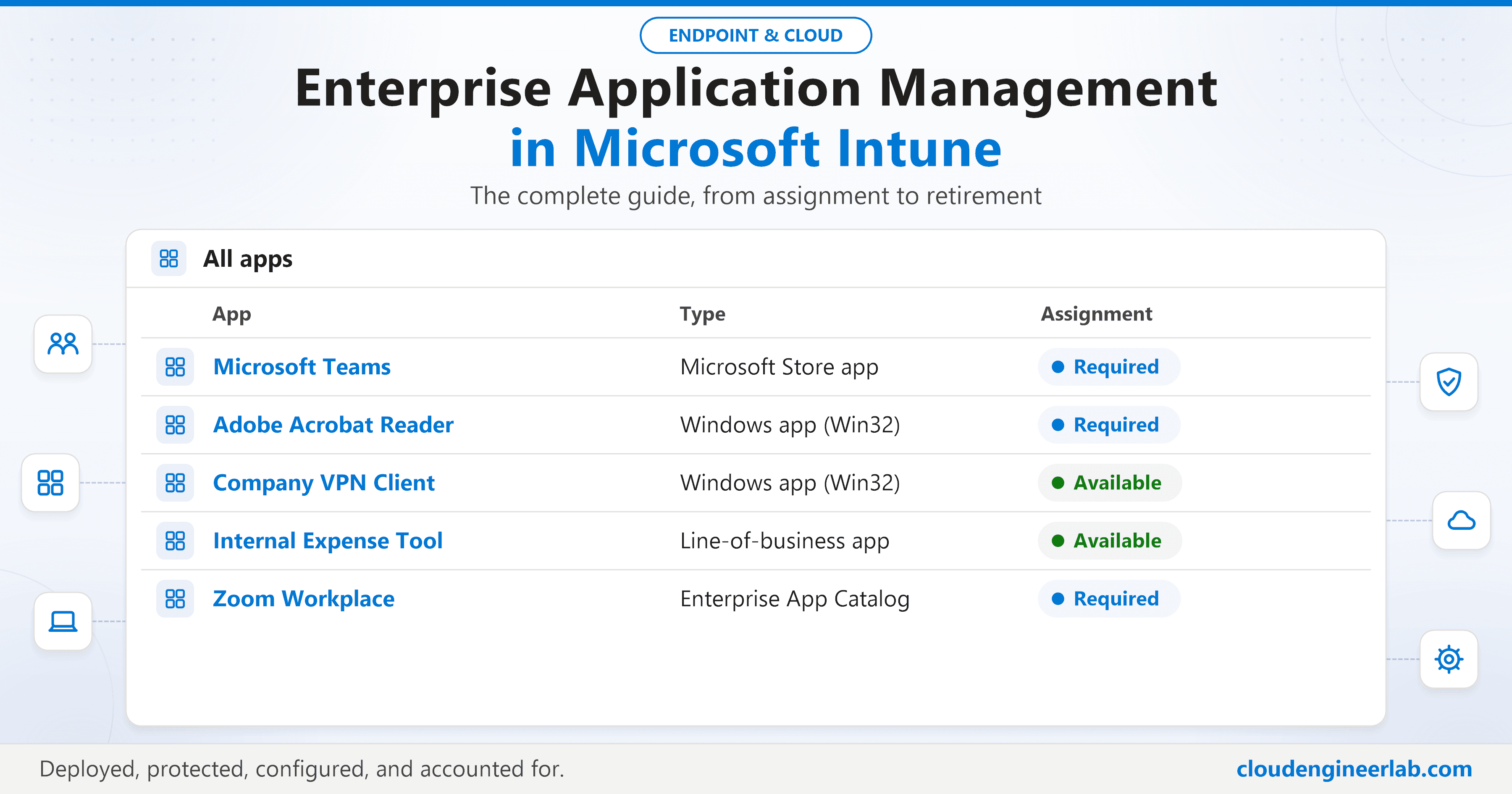
Deploying an app is the easy part. Protecting its data, configuring it on arrival, and retiring it cleanly is where most app management actually lives.

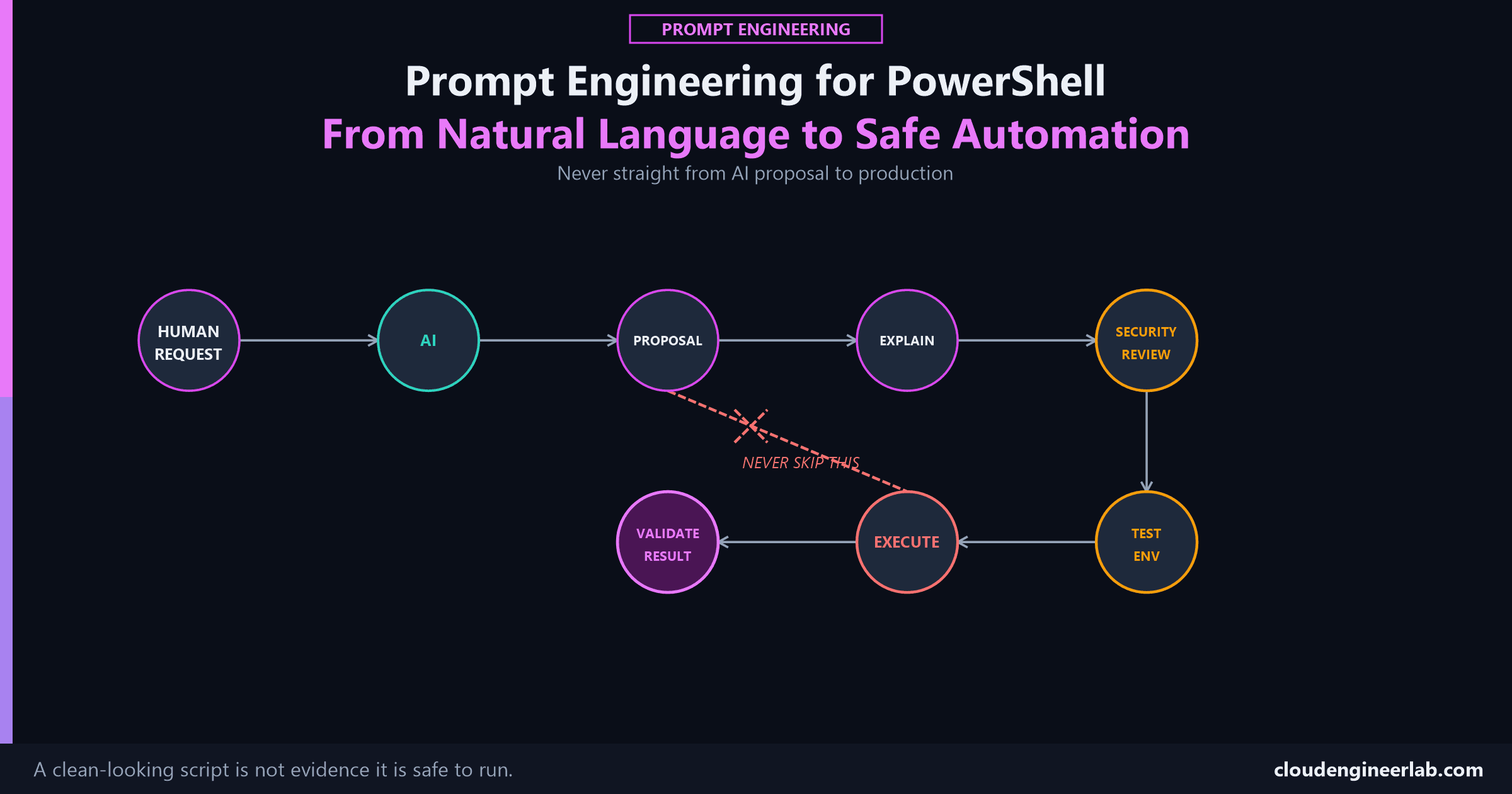
AI can write you a working PowerShell script in seconds. Whether it's safe to run against your tenant is a completely separate question, with its own workflow.

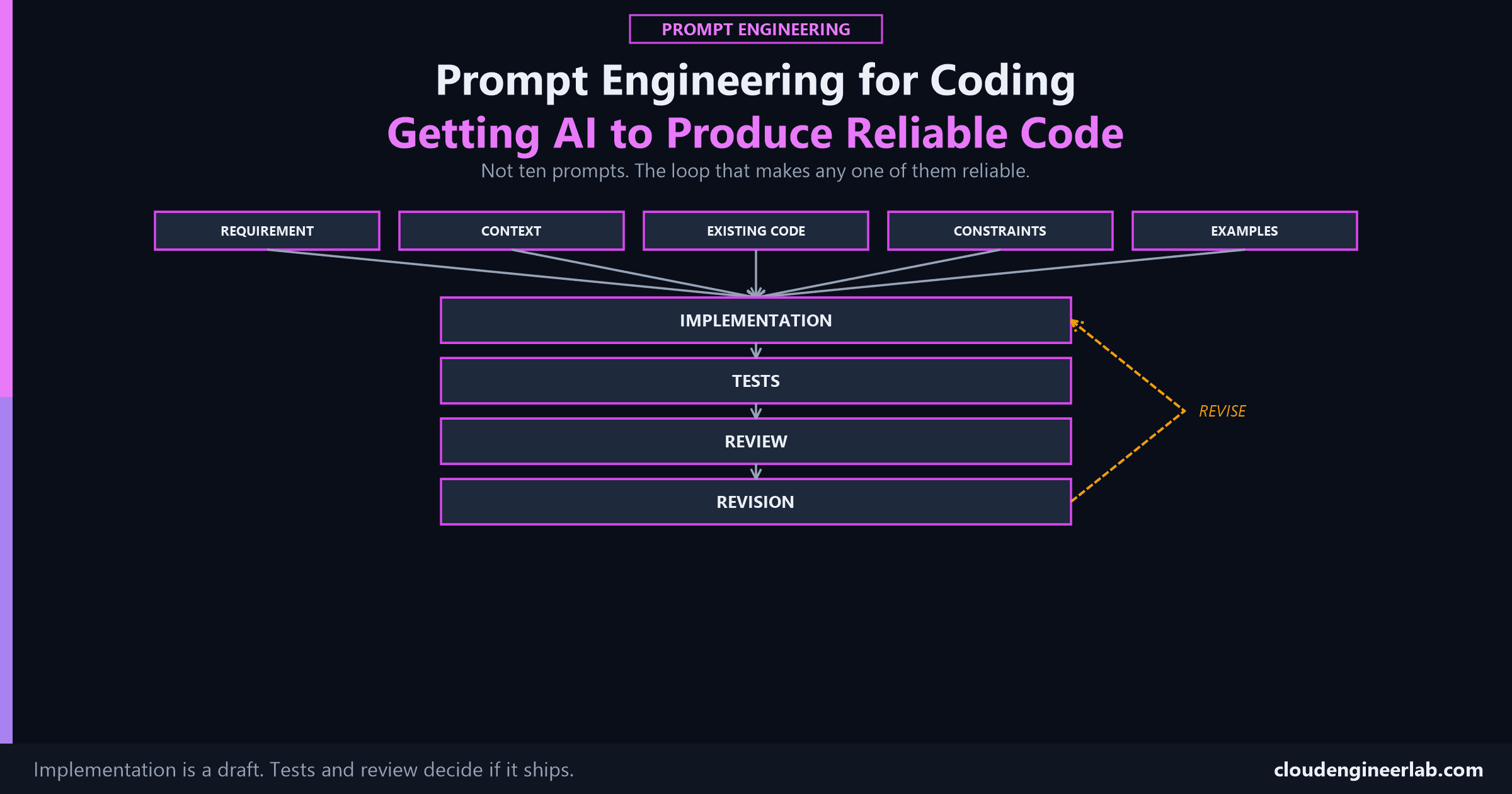
Not another list of coding prompts. The actual engineering loop, requirement through revision, that decides whether AI-generated code survives contact with a real codebase.

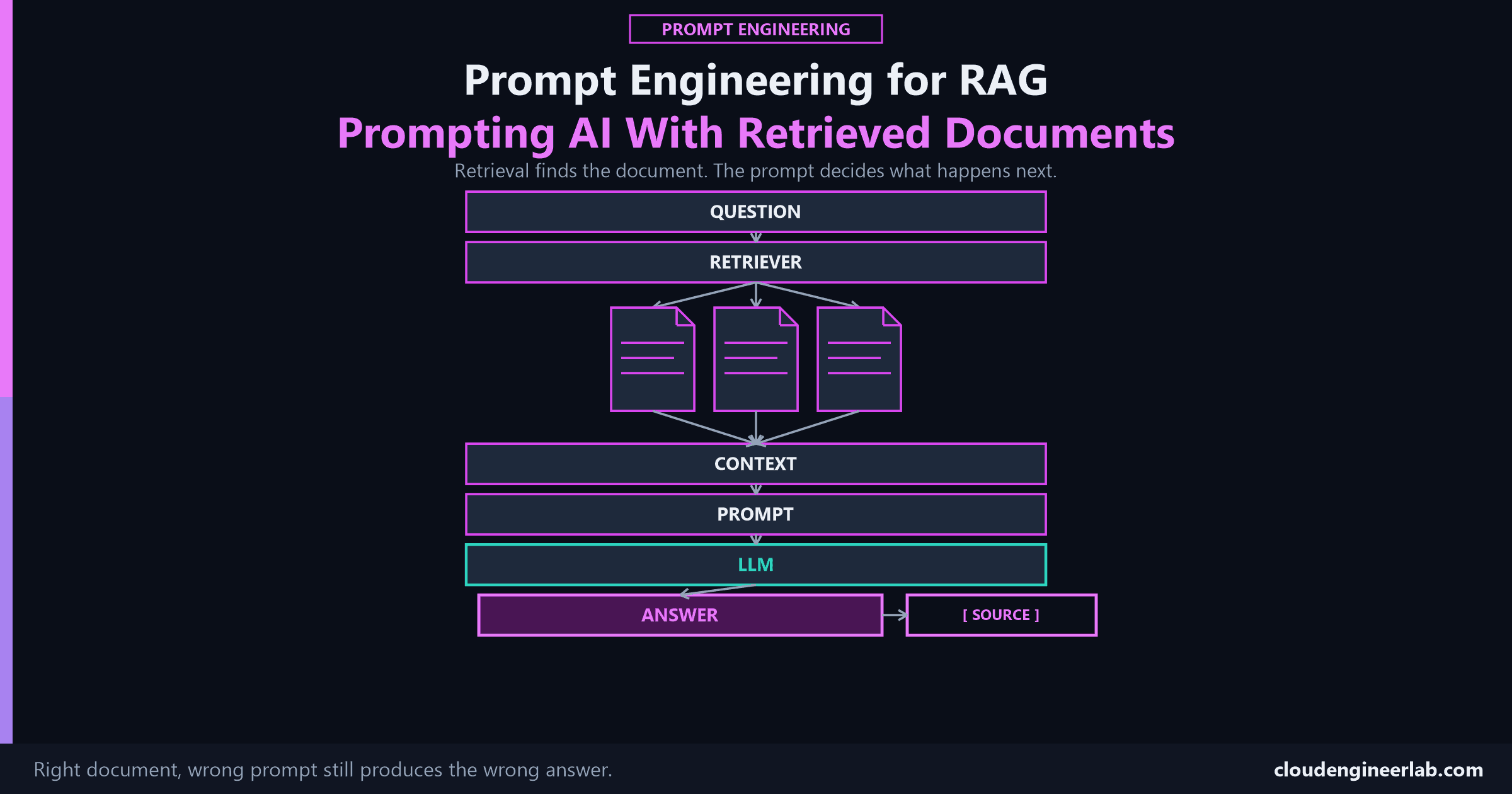
Retrieval can hand the model the exact right document and still get a wrong answer, if the prompt around that document doesn't do its half of the job.

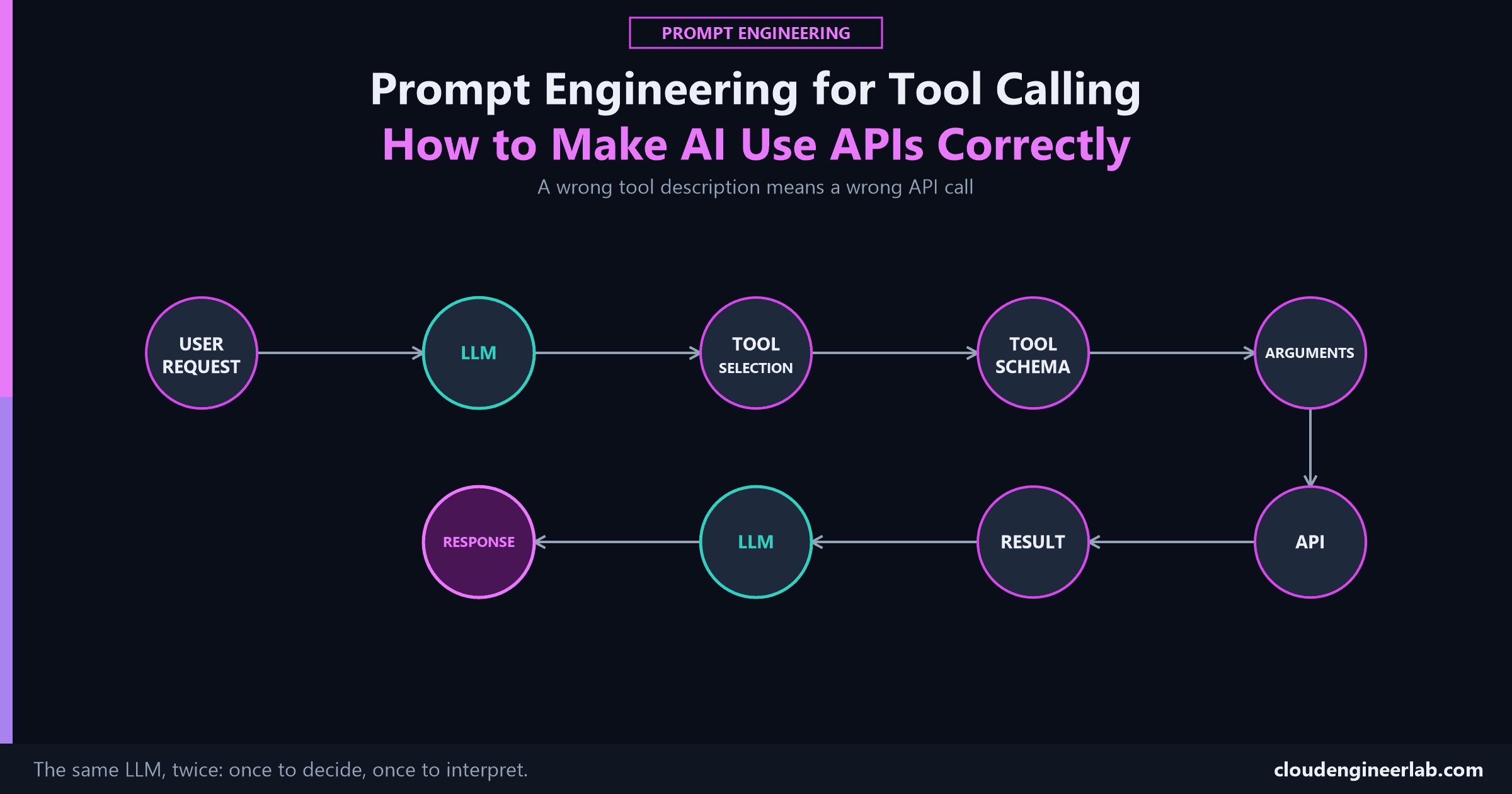
A tool description is a prompt the model reads to decide whether to use it at all. Get that wrong and no amount of clever wording elsewhere fixes it.

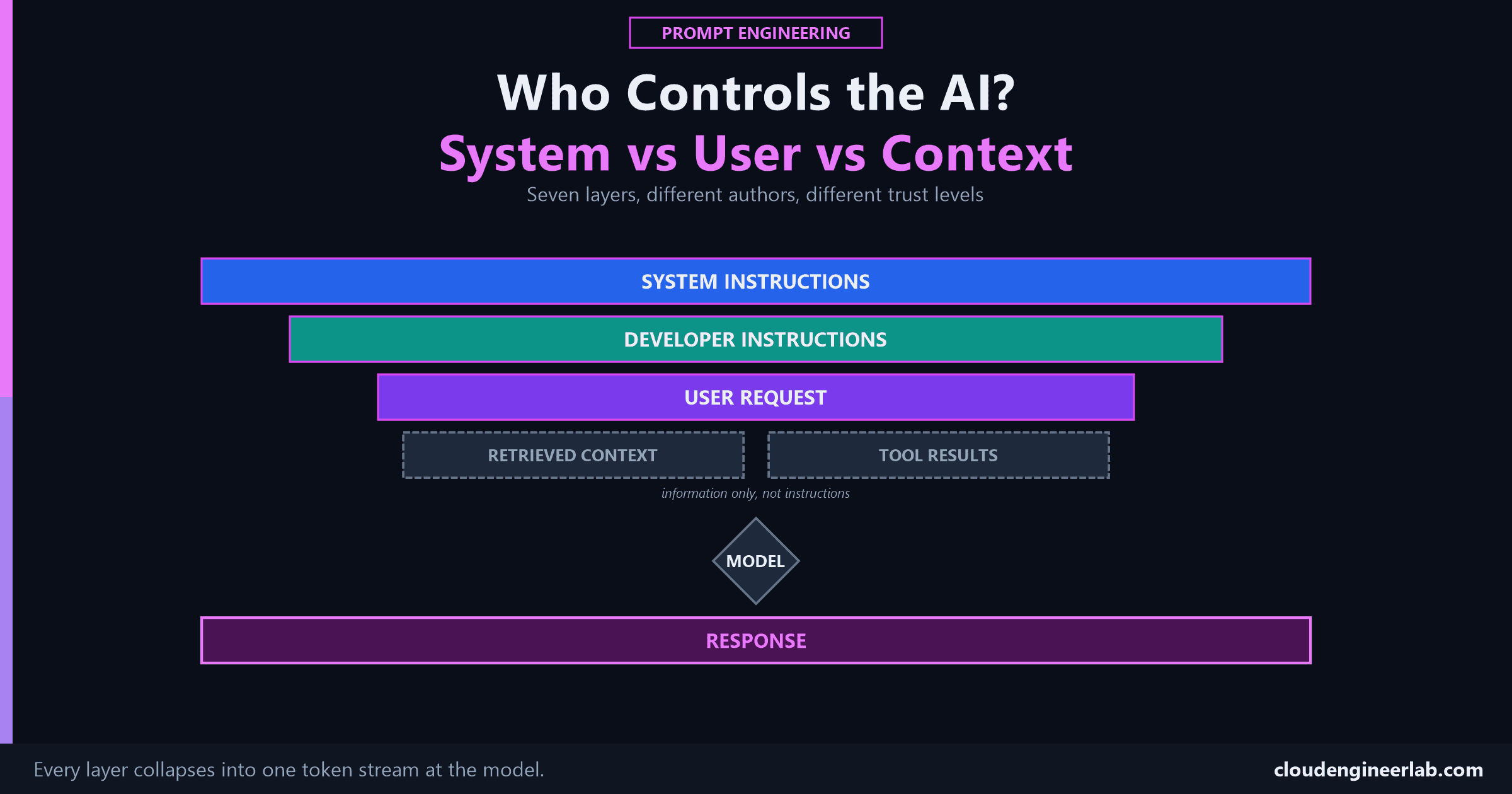
Every AI response is assembled from up to seven layers, written by different parties with different trust levels. Here's what each one actually controls.

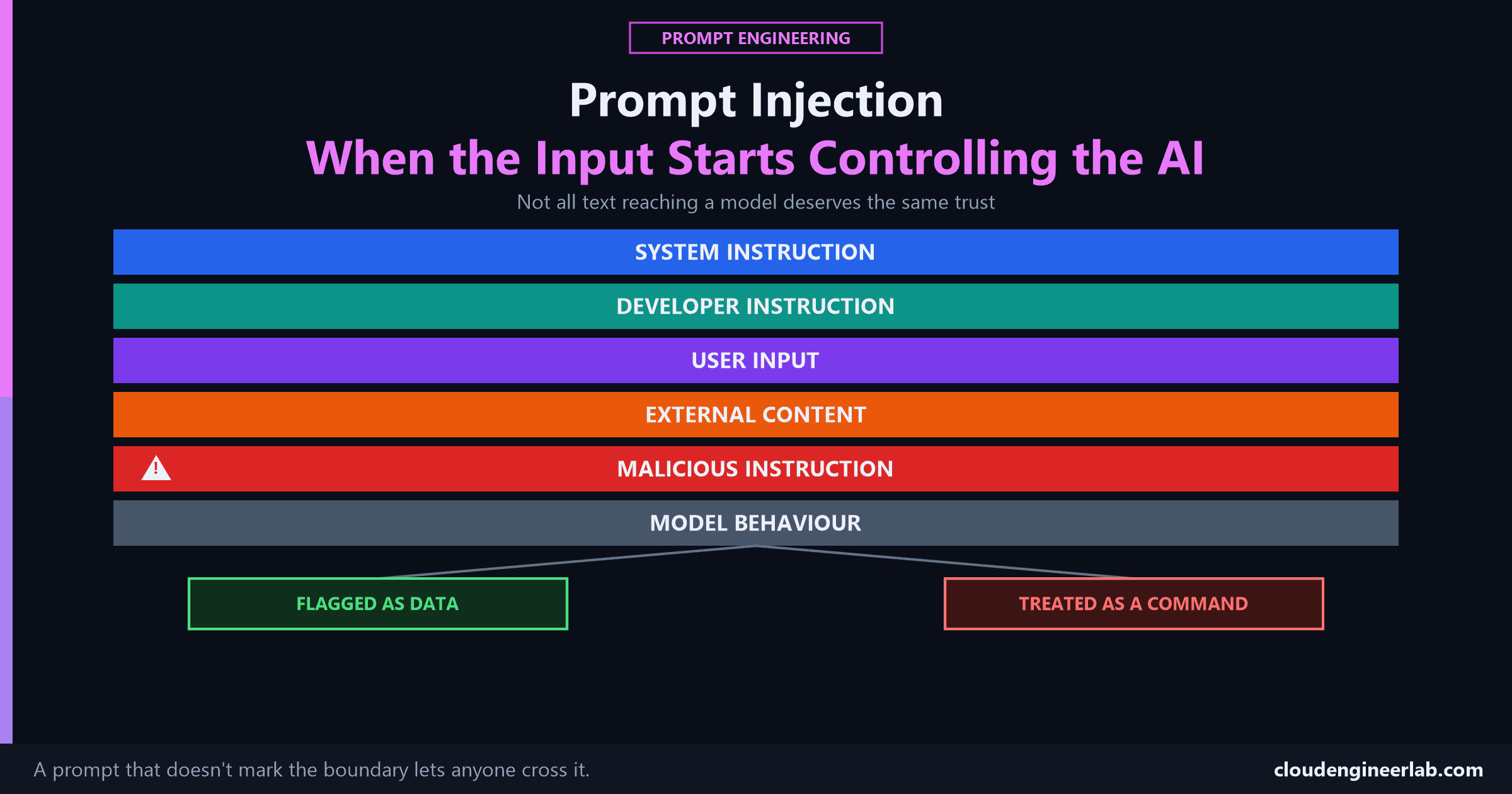
Not every piece of text you paste into a prompt is safe to treat as an instruction. Where that trust breaks down, and how to structure a prompt so it doesn't.

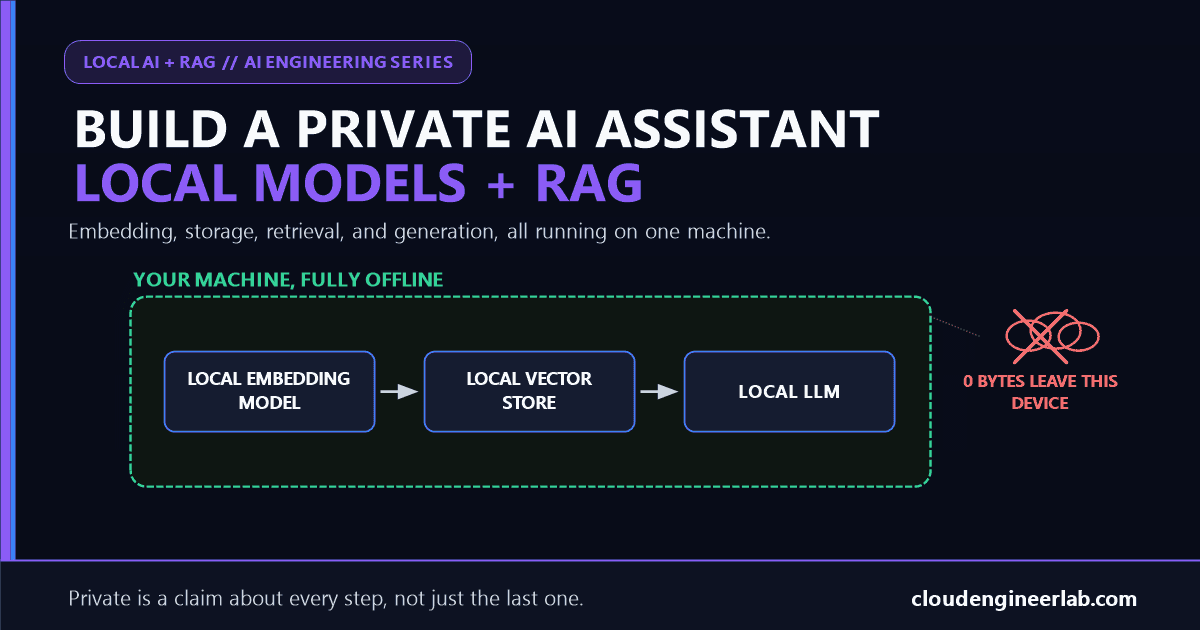
Cloud RAG sends your documents to someone else's servers as embeddings and as context. Here's the same pipeline built entirely on your own machine instead.

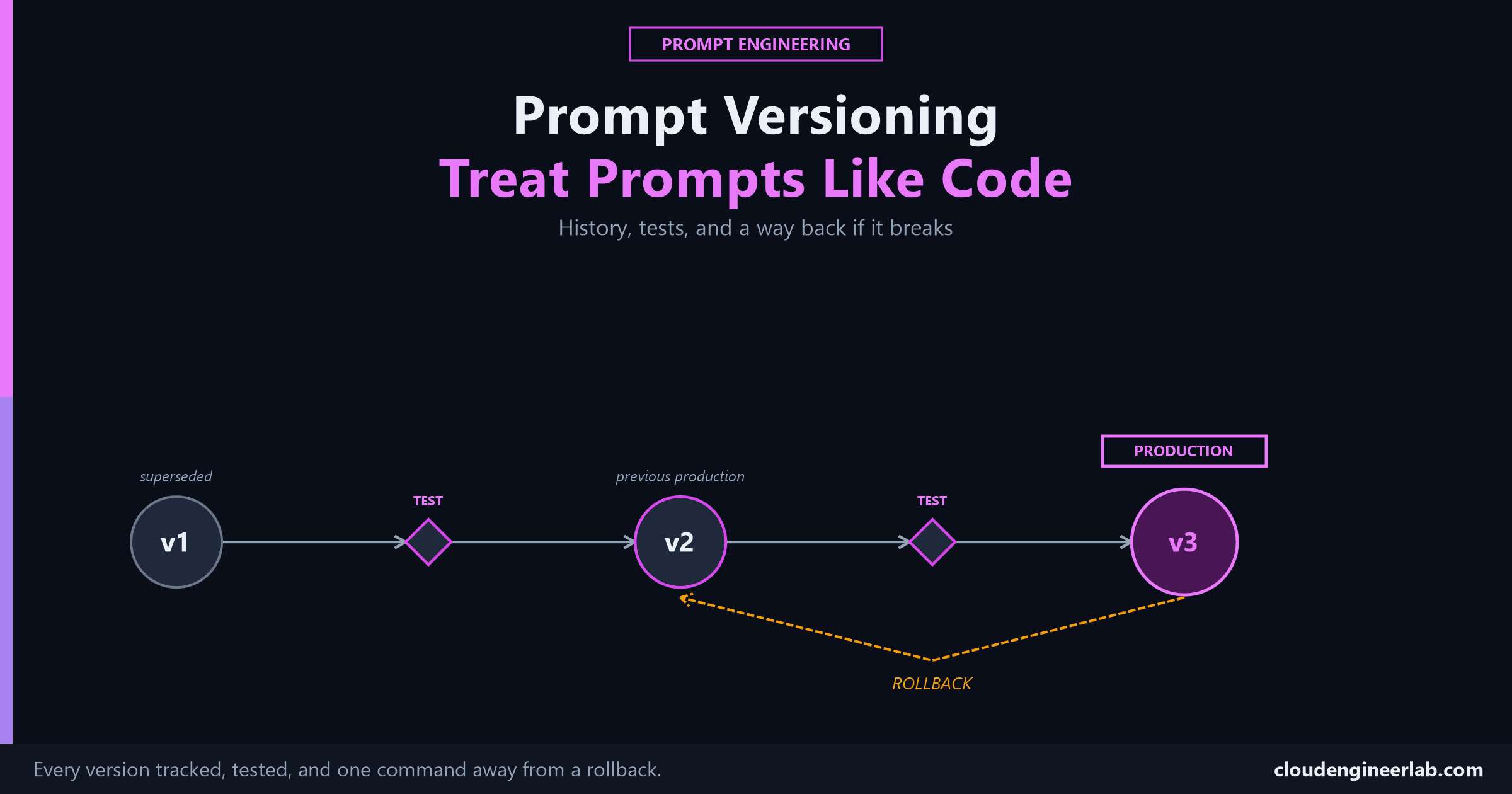
A prompt edited live in a vendor dashboard has no history, no diff, and no way back. Git, change history, and rollback fix all three.

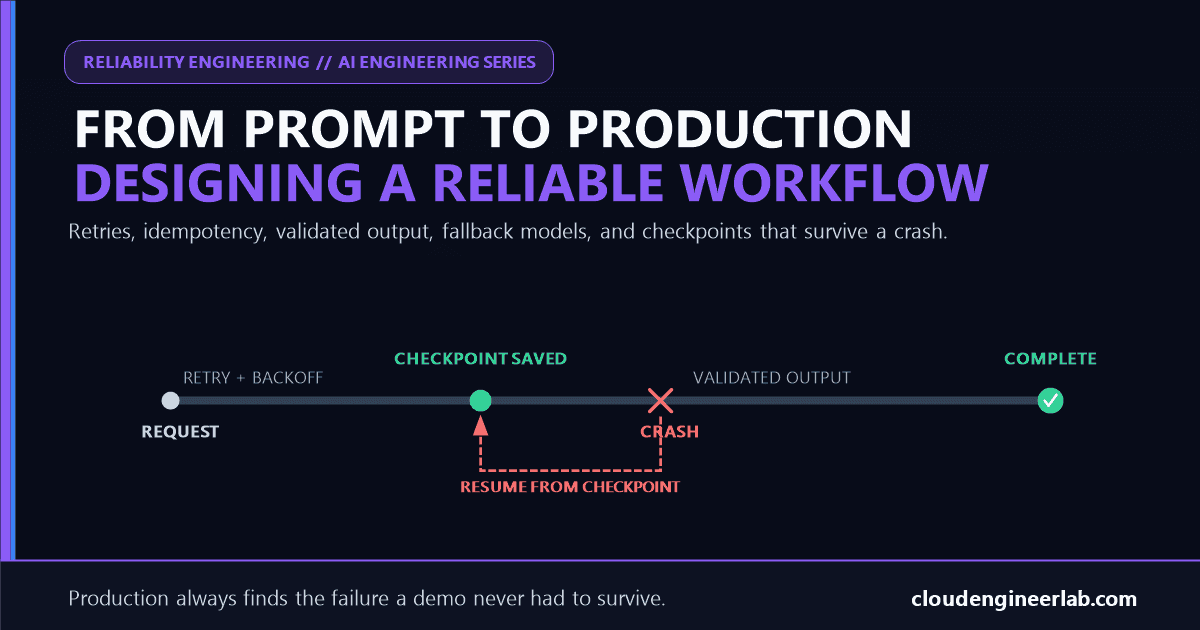
A workflow that double-charges a customer on retry, or loses 40 minutes of progress on a crash, isn't reliable. Here's the toolkit that actually fixes both.

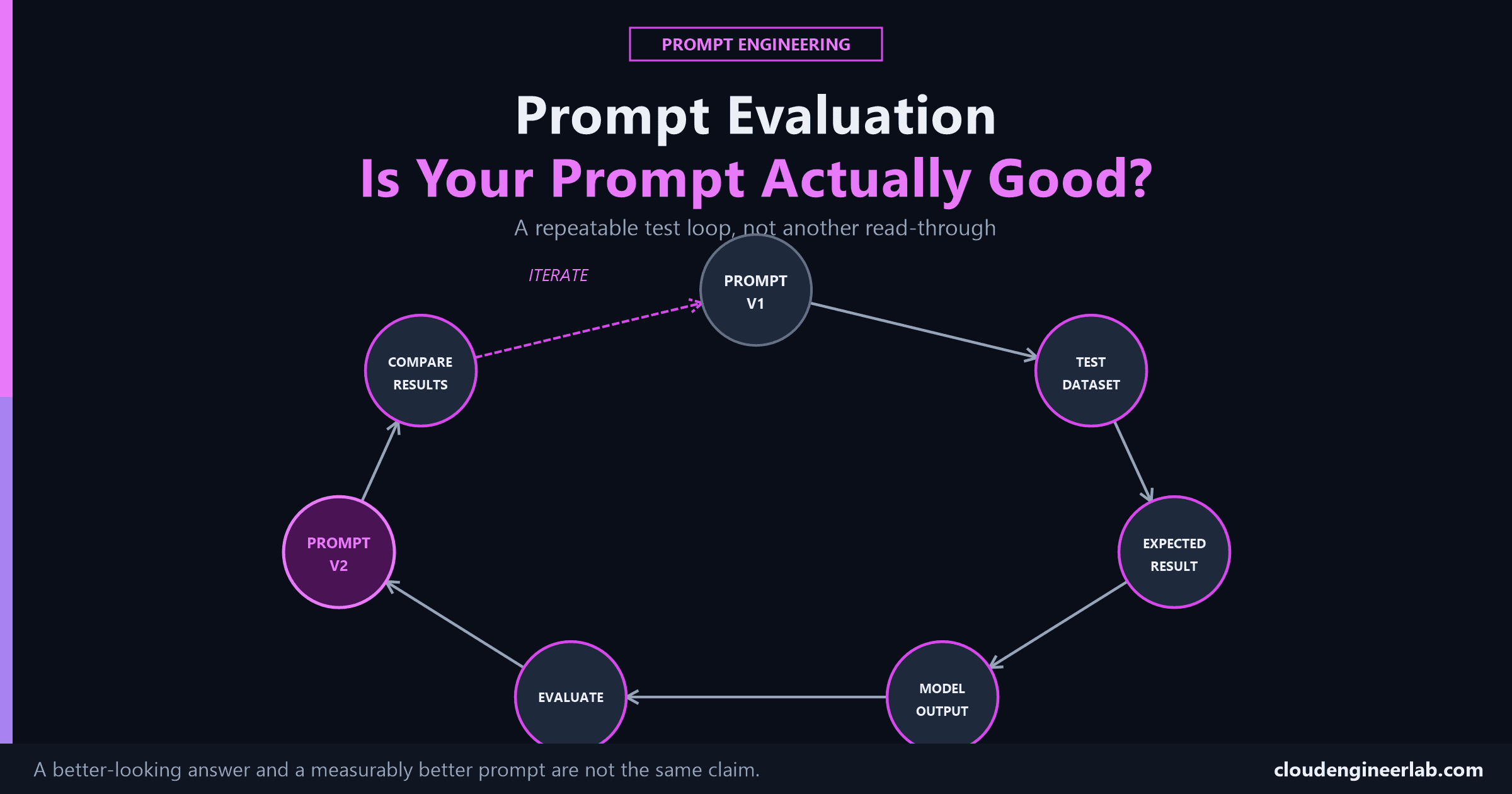
Reading one better-looking answer isn't evaluation. A real testing framework compares prompt versions against a fixed dataset, with real, repeatable metrics.