From Application Packaging to Secure Deployment: Where Security Actually Breaks
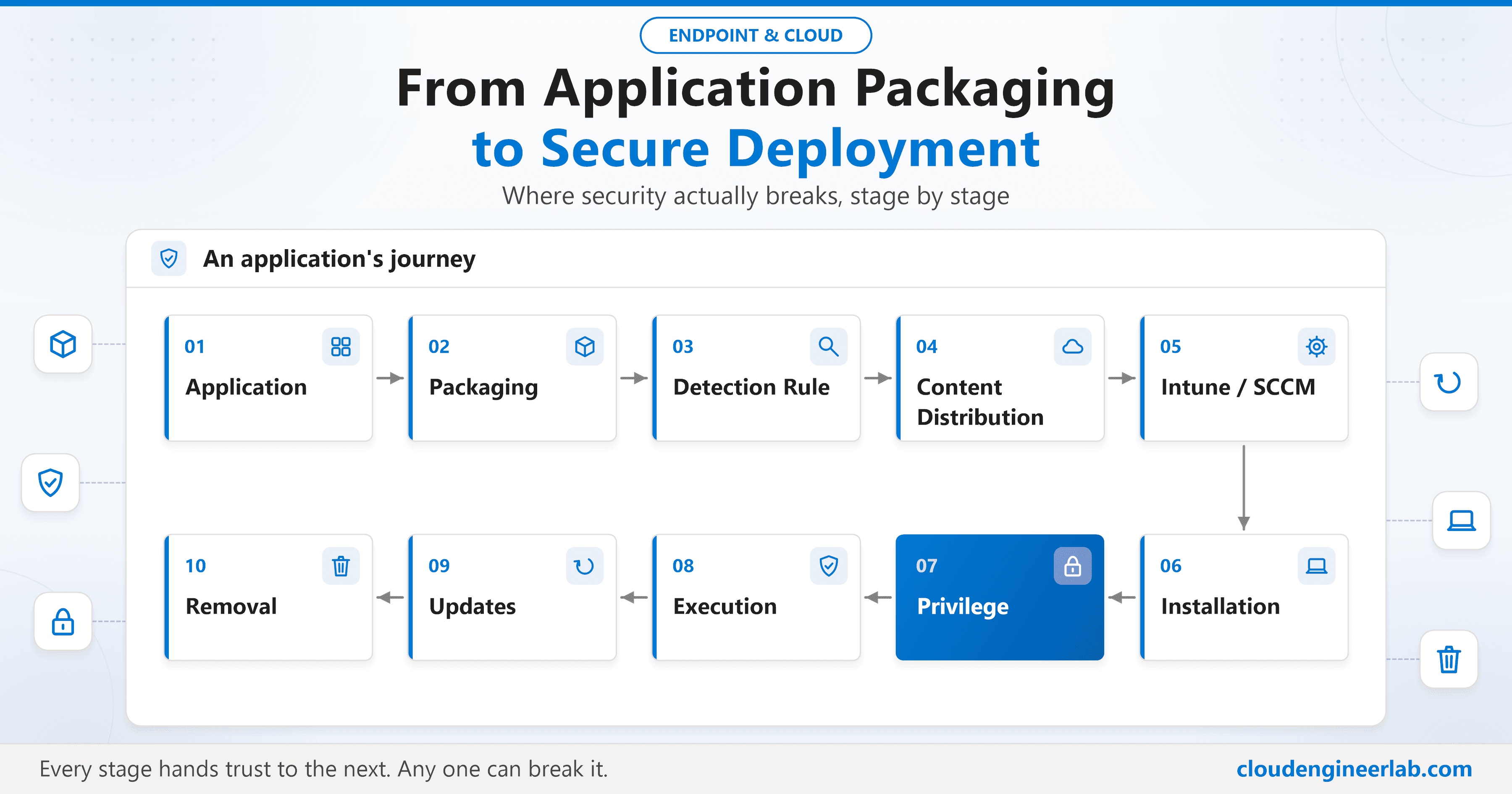
Follow one app from source to removal and see where security breaks: secrets in packages, fakeable detection, SYSTEM installs, writable folders and zombie apps.
20 posts

Follow one app from source to removal and see where security breaks: secrets in packages, fakeable detection, SYSTEM installs, writable folders and zombie apps.

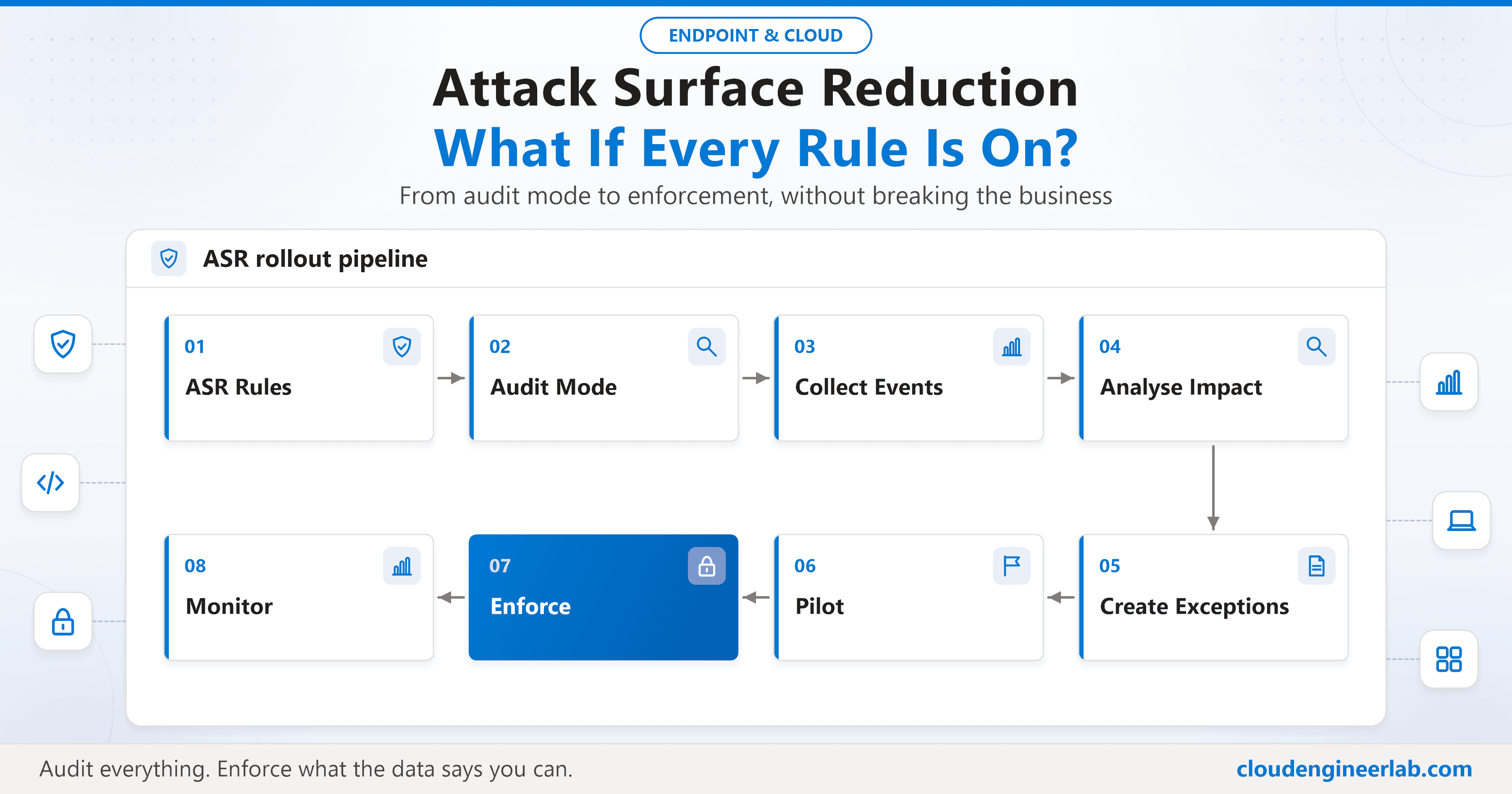
Every ASR rule on at once: what lights up in audit, what breaks Office, PowerShell, developer machines and line-of-business apps, and how to reach Block safely.

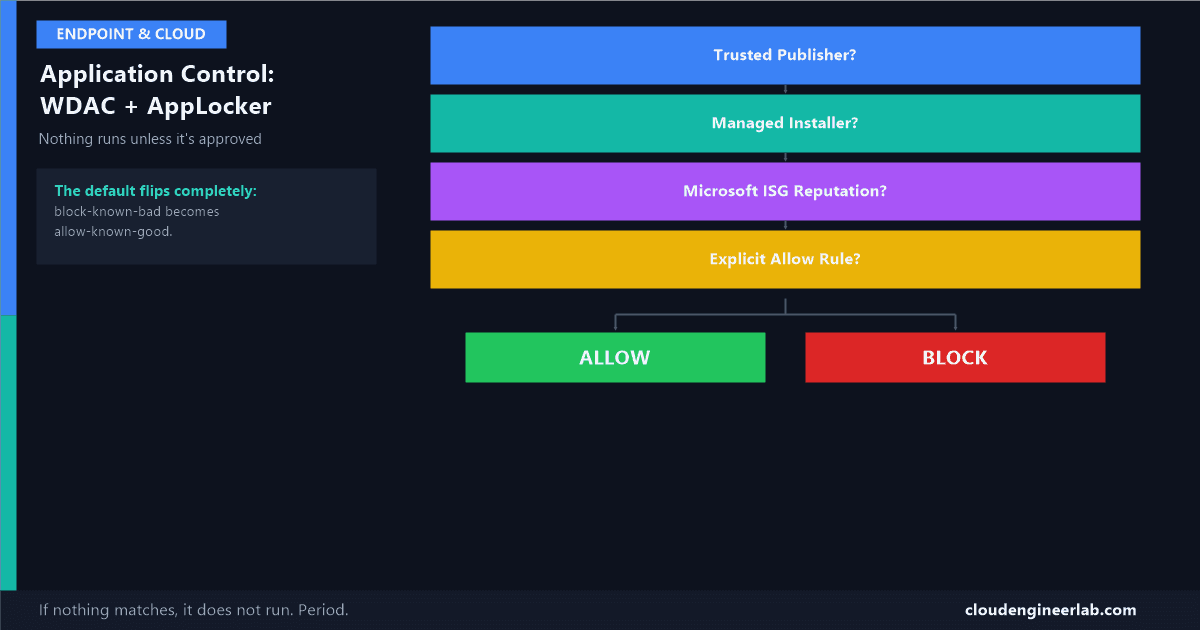
AppLocker vs WDAC vs Intune App Control for Business: how allowlisting decides what runs, and a phased strategy to enforce it without breaking the fleet.

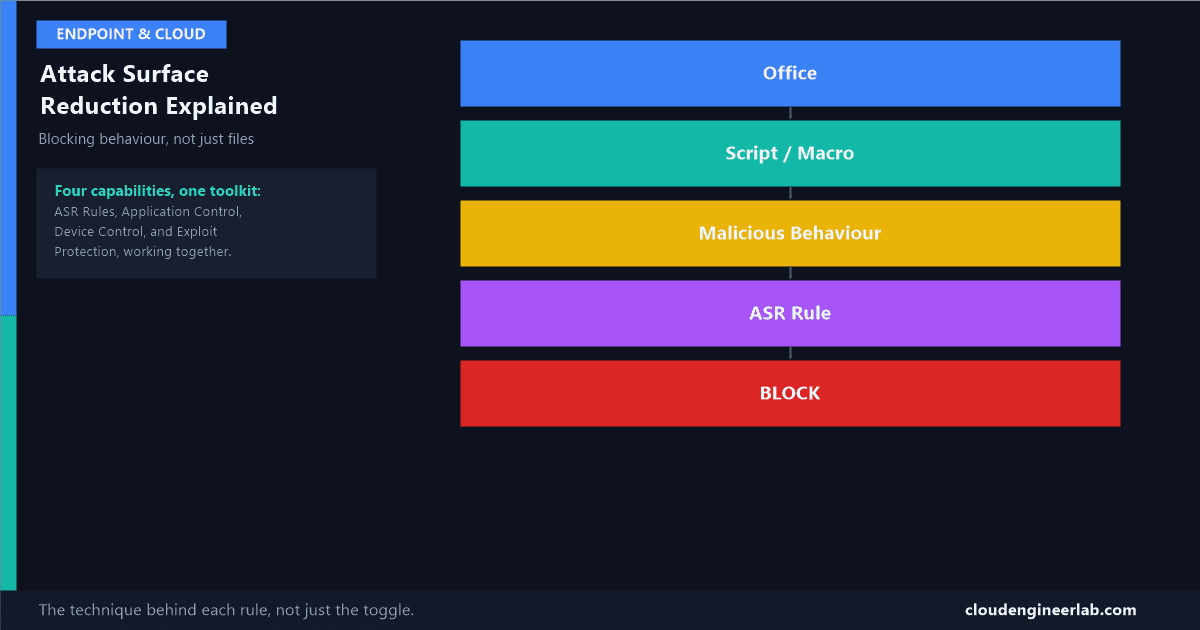
ASR rules don't detect malware, they block the specific techniques malware needs to work. Here's what each major rule actually stops, and how it fits into Intune's wider hardening toolkit.

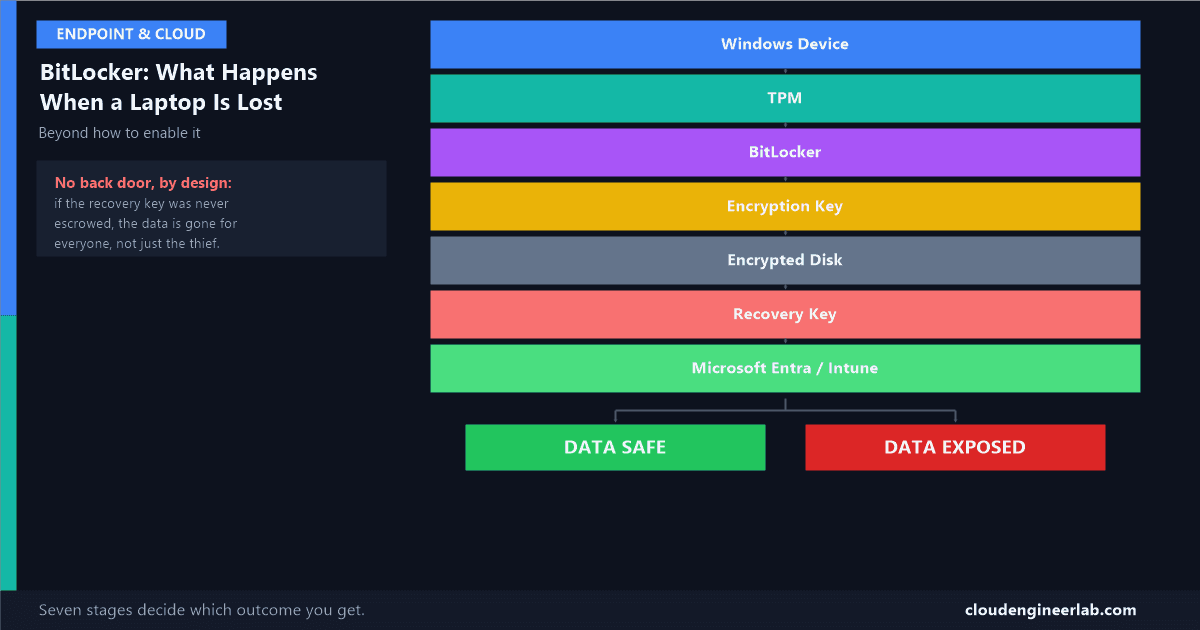
Not how to turn BitLocker on. What actually happens, at the cryptographic level, between a laptop going missing and its data staying unreadable, or not.

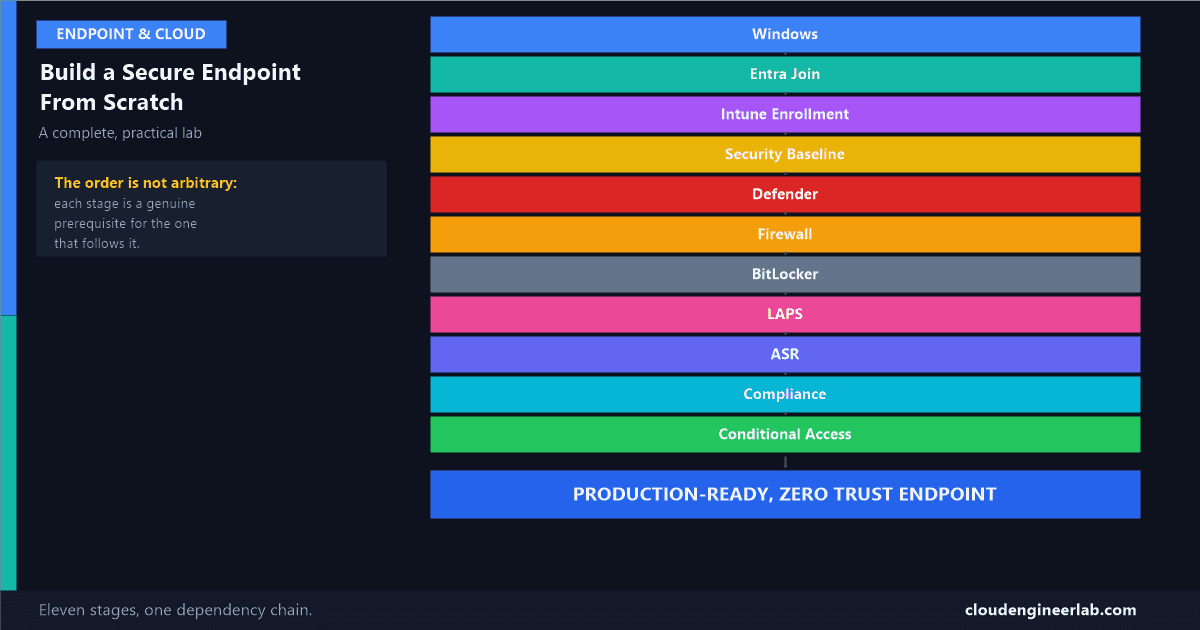
Eleven stages, in the exact order they actually depend on each other, from a blank Windows machine to a fully hardened, Conditional-Access-protected endpoint.

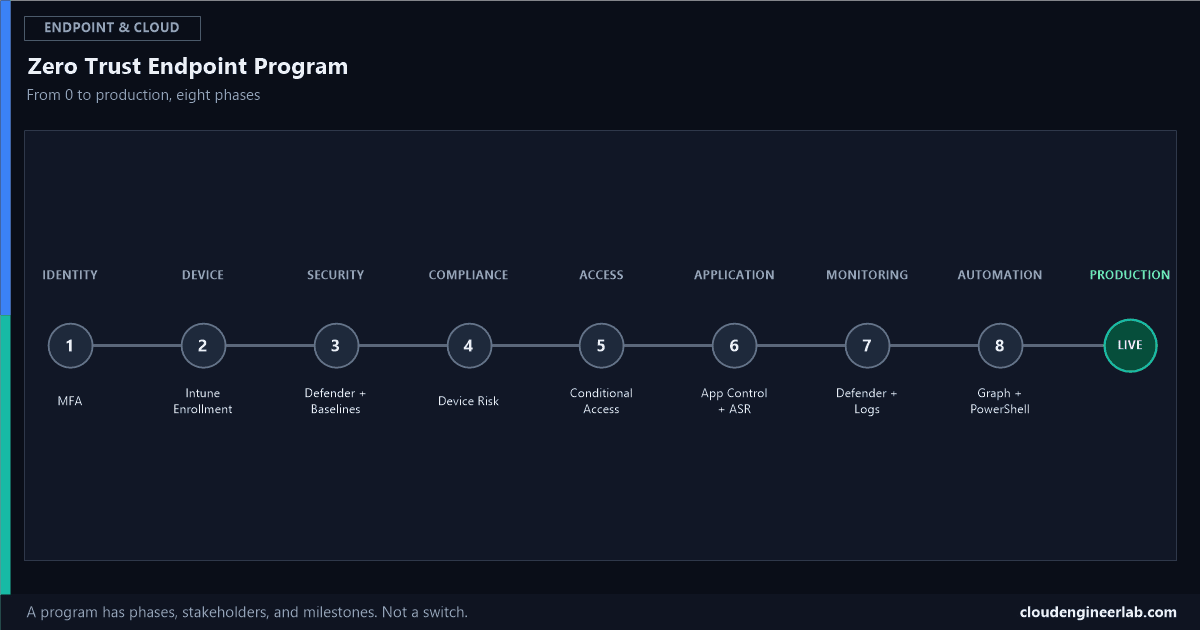
Deploying every control at once produces chaos, not Zero Trust. Eight phases, in the order a real enterprise program actually runs them, with the pitfall at each one.

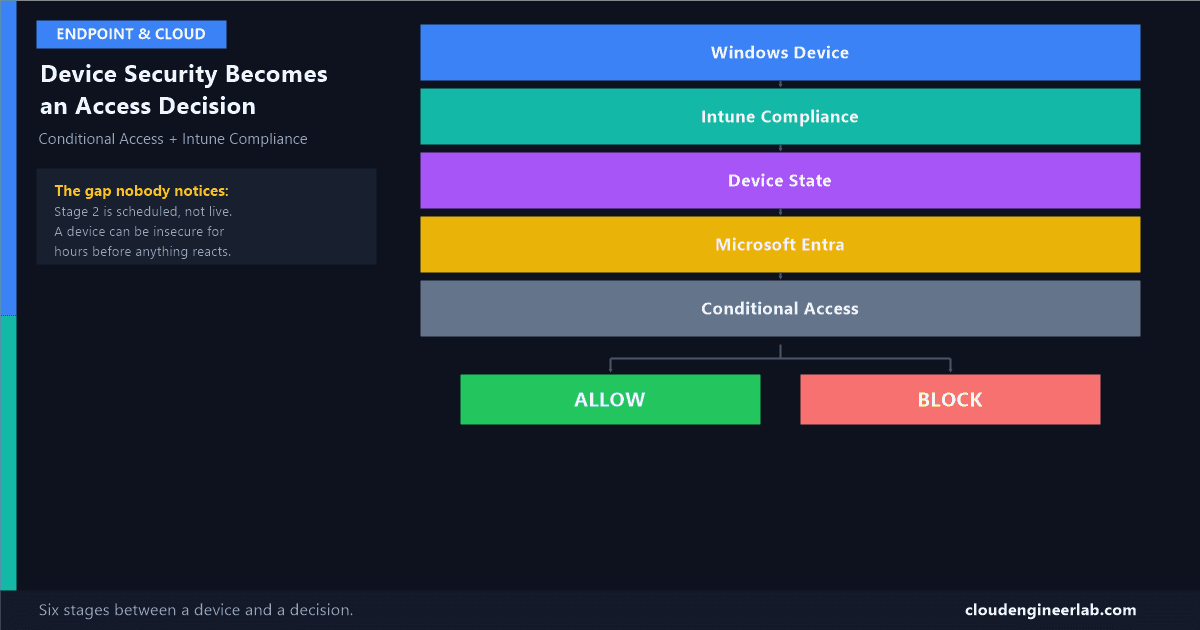
A device isn't just compliant or not. Follow the actual six-stage path a laptop's security state travels before it becomes an Allow or Block.

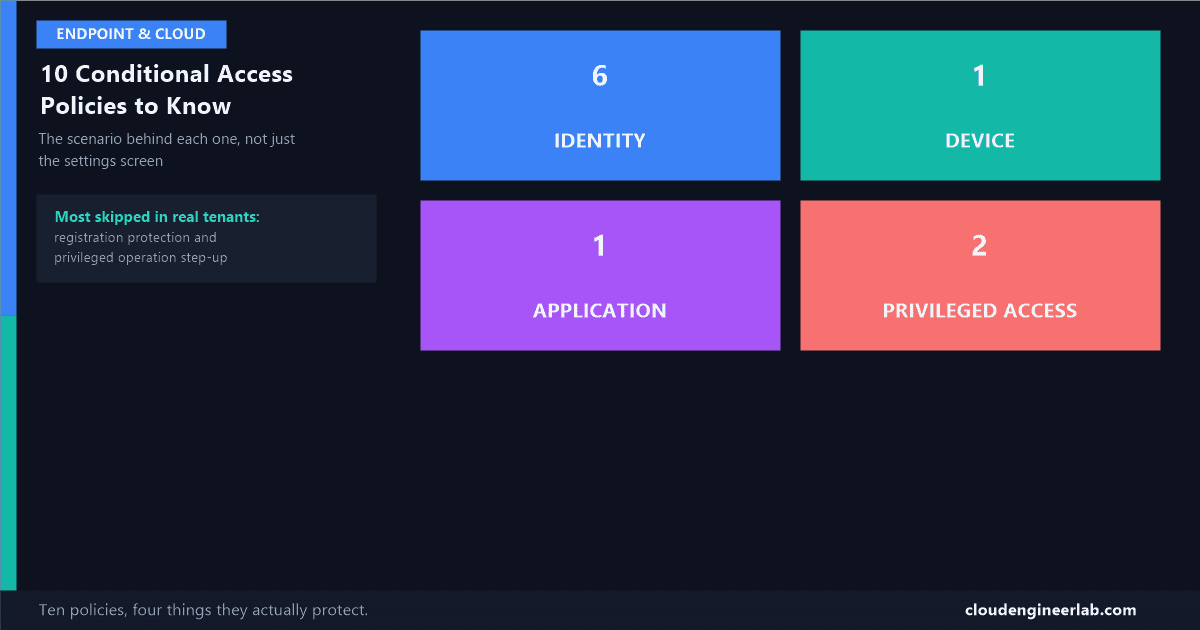
Ten real Conditional Access patterns explained through the actual scenario each one exists to stop, not just the settings screen you'd click through.

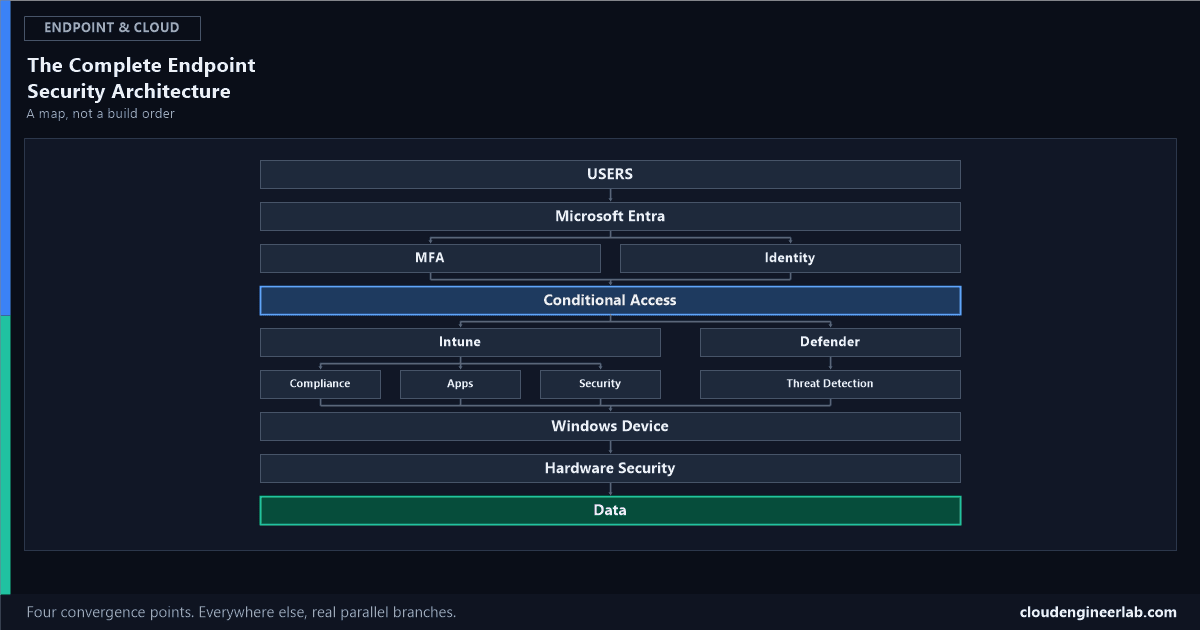
Every product covered on this site, placed on one map, showing exactly what branches in parallel and what has to converge before the next layer can trust it.

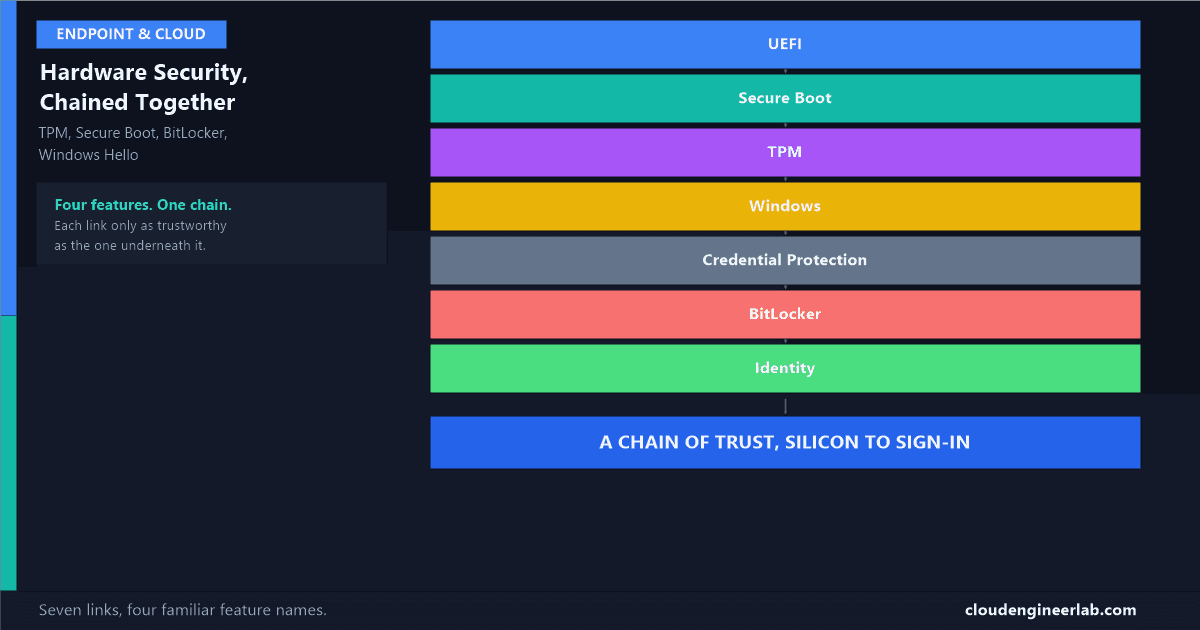
Four security features that sound unrelated are actually one continuous chain of trust, from the moment power hits the motherboard to the moment you sign in.

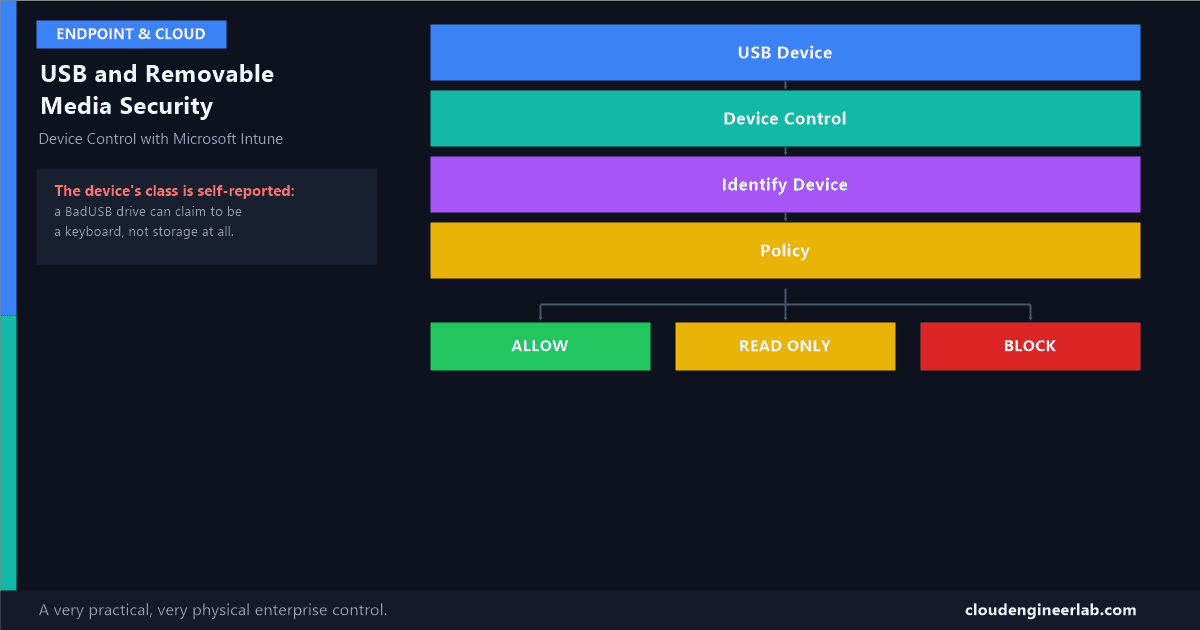
A USB drive is a fully hardened fleet's last unhardened door. How Intune actually identifies a plugged-in device and decides Allow, Block, or Read-only.

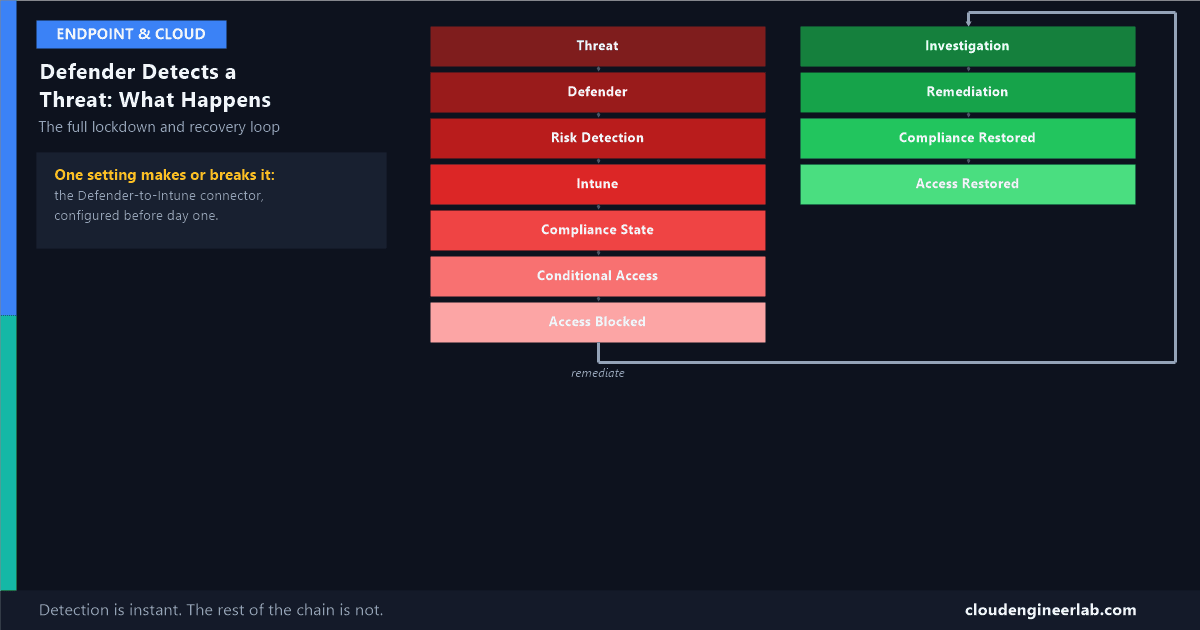
Eleven stages from a live threat to a locked-out device, and eleven more back to normal. The full closed loop, with the real lag at every handoff.

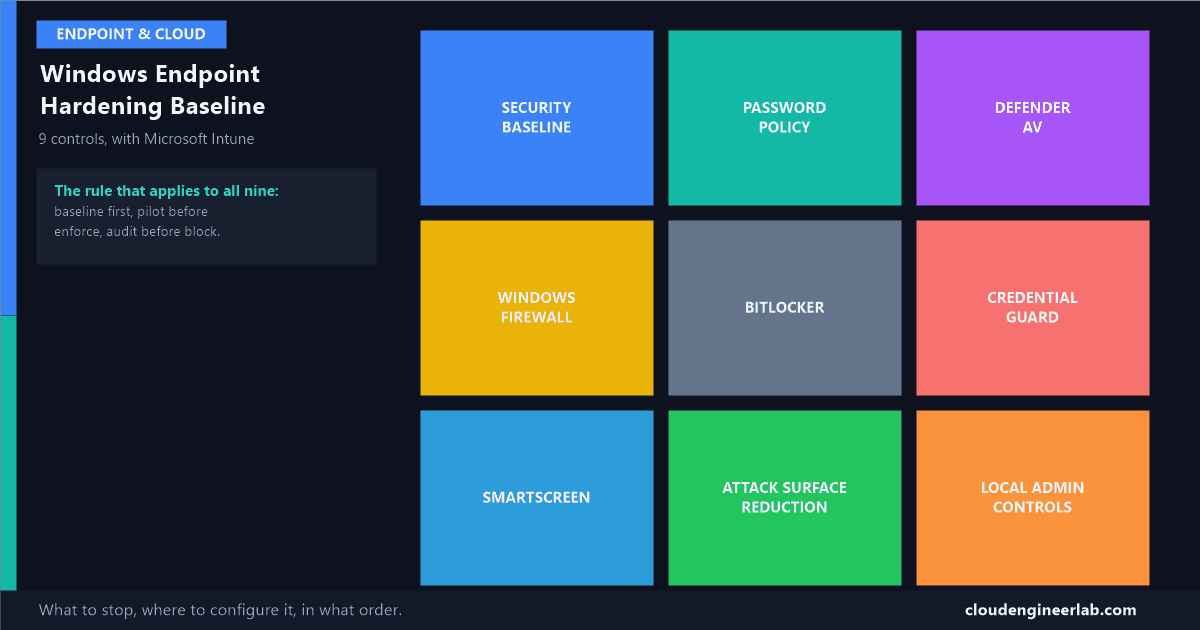
Nine controls that actually move the needle on Windows security, what each one stops, the exact Intune blade to configure it in, and the order to roll them out safely.

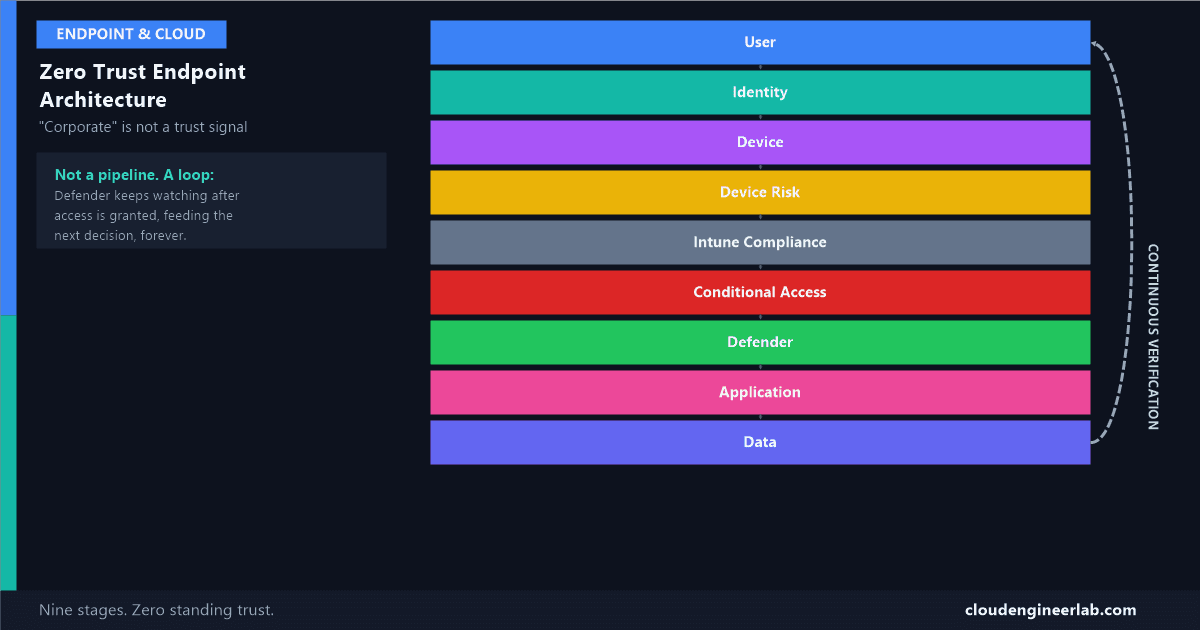
A domain-joined, company-issued laptop is not automatically trustworthy. Nine layers, one continuous loop, and why 'corporate' was never the actual trust signal.

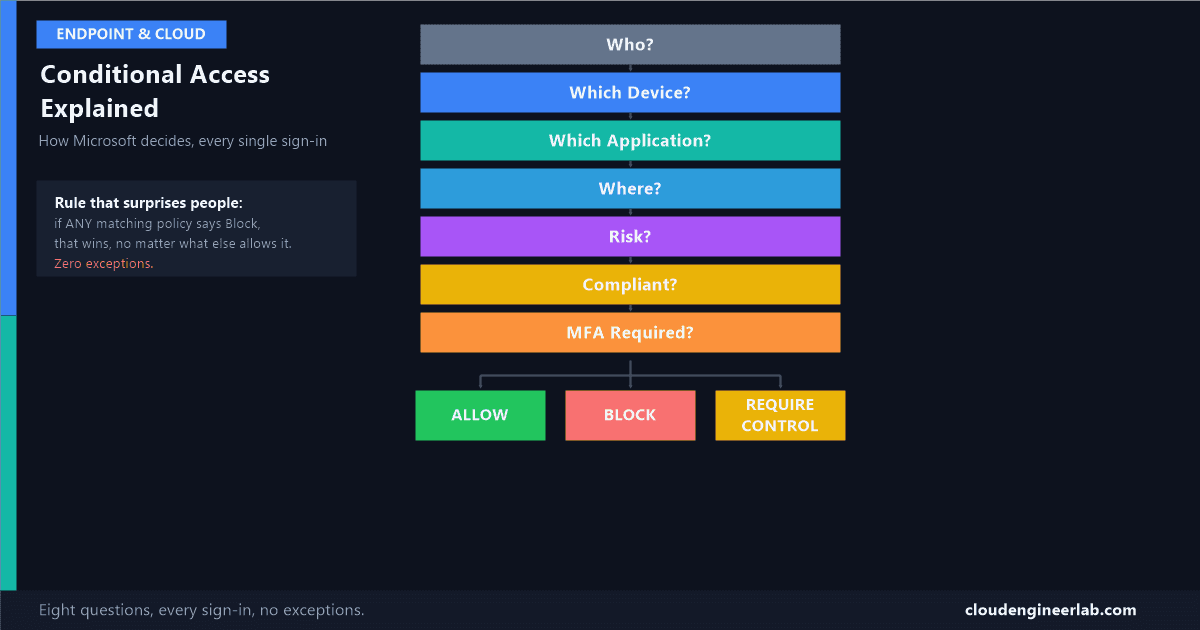
Every sign-in gets asked the same eight questions before Microsoft decides anything. Here's the actual decision engine, walked through with real examples.

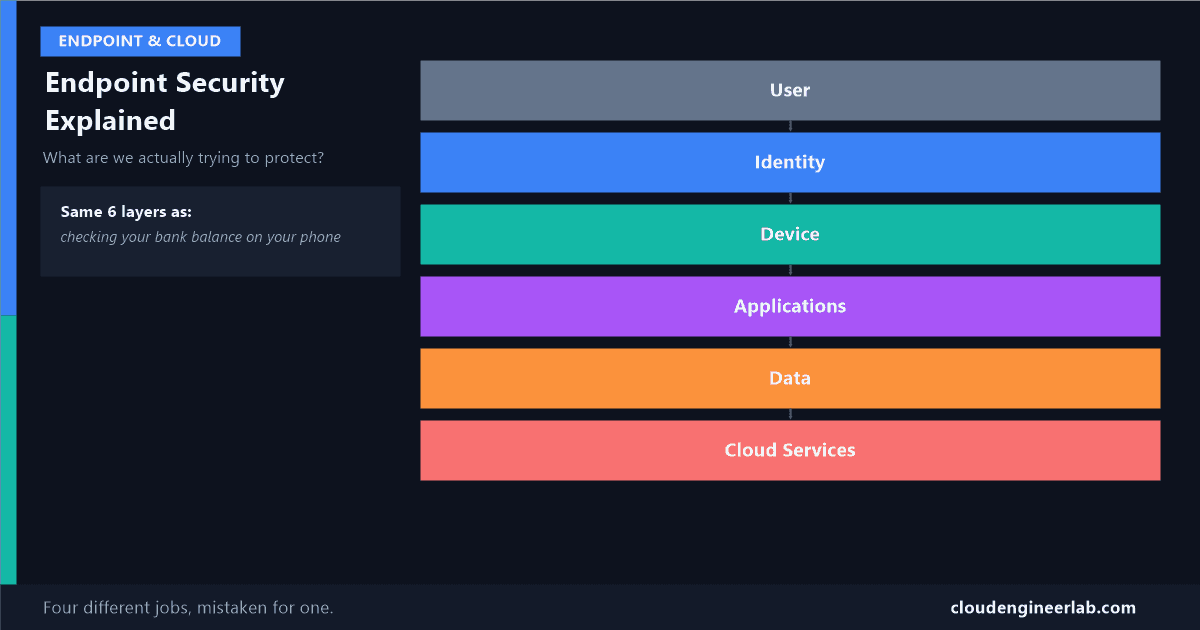
"Endpoint security" sounds like one thing. It's actually four different jobs stacked on top of each other, and mixing them up is how real breaches happen.

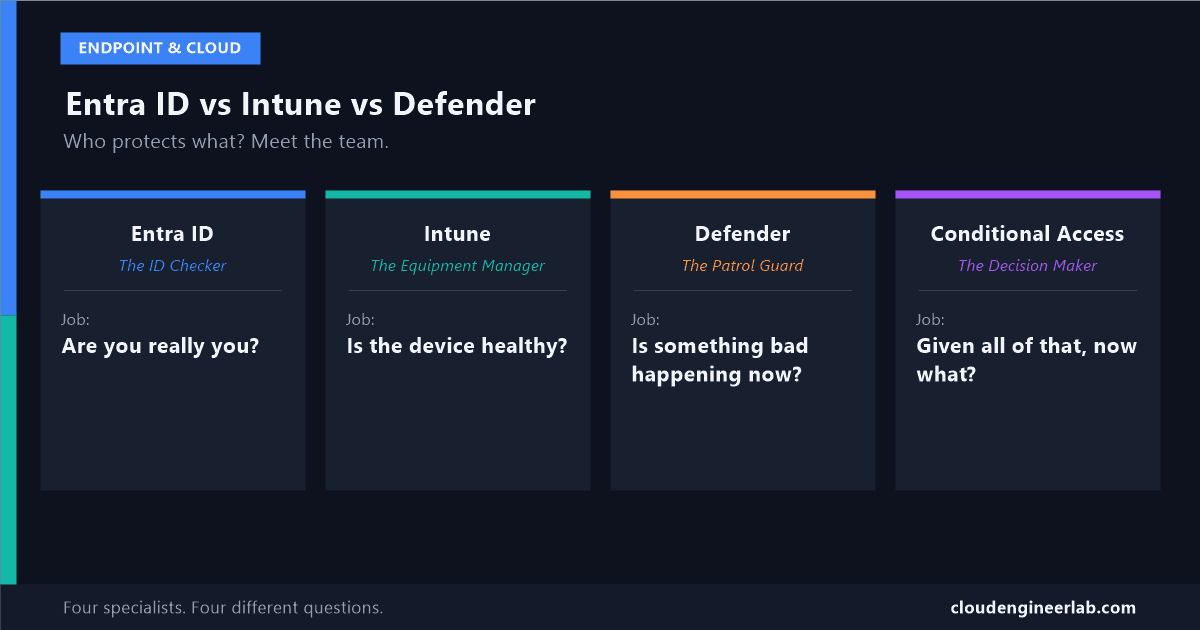
Three products, three different jobs, one common mistake: assuming any one of them alone is 'the security team.' Meet each one and find out who actually handles what.

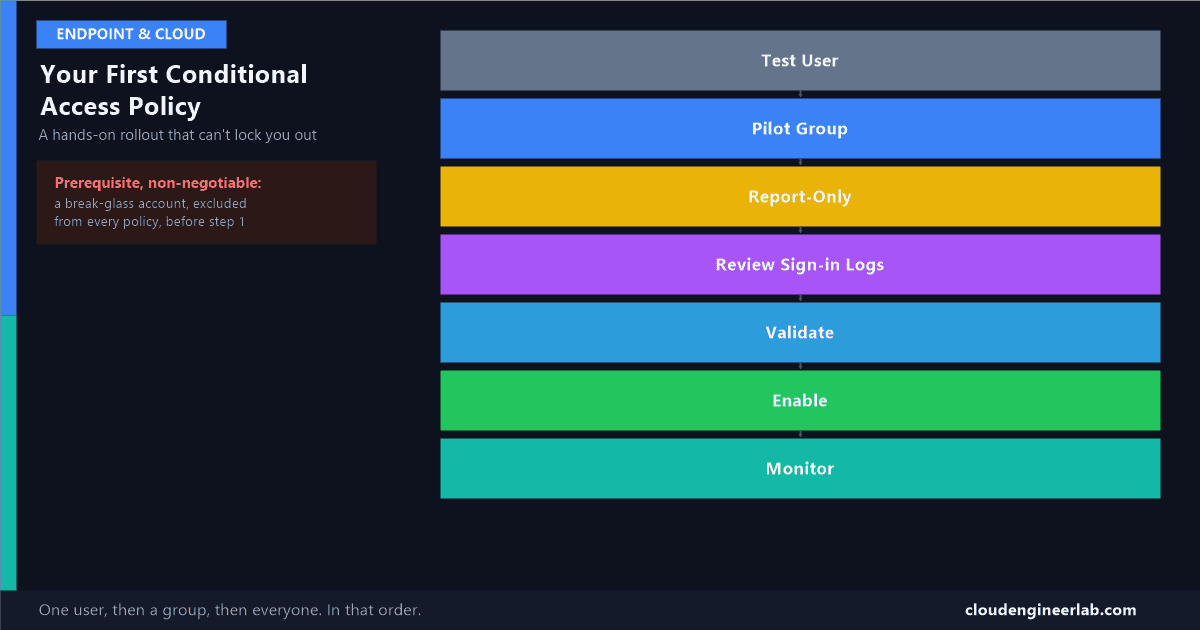
A real, step-by-step rollout, from one test user to full monitoring, built so your first policy can't accidentally lock out the whole organisation.

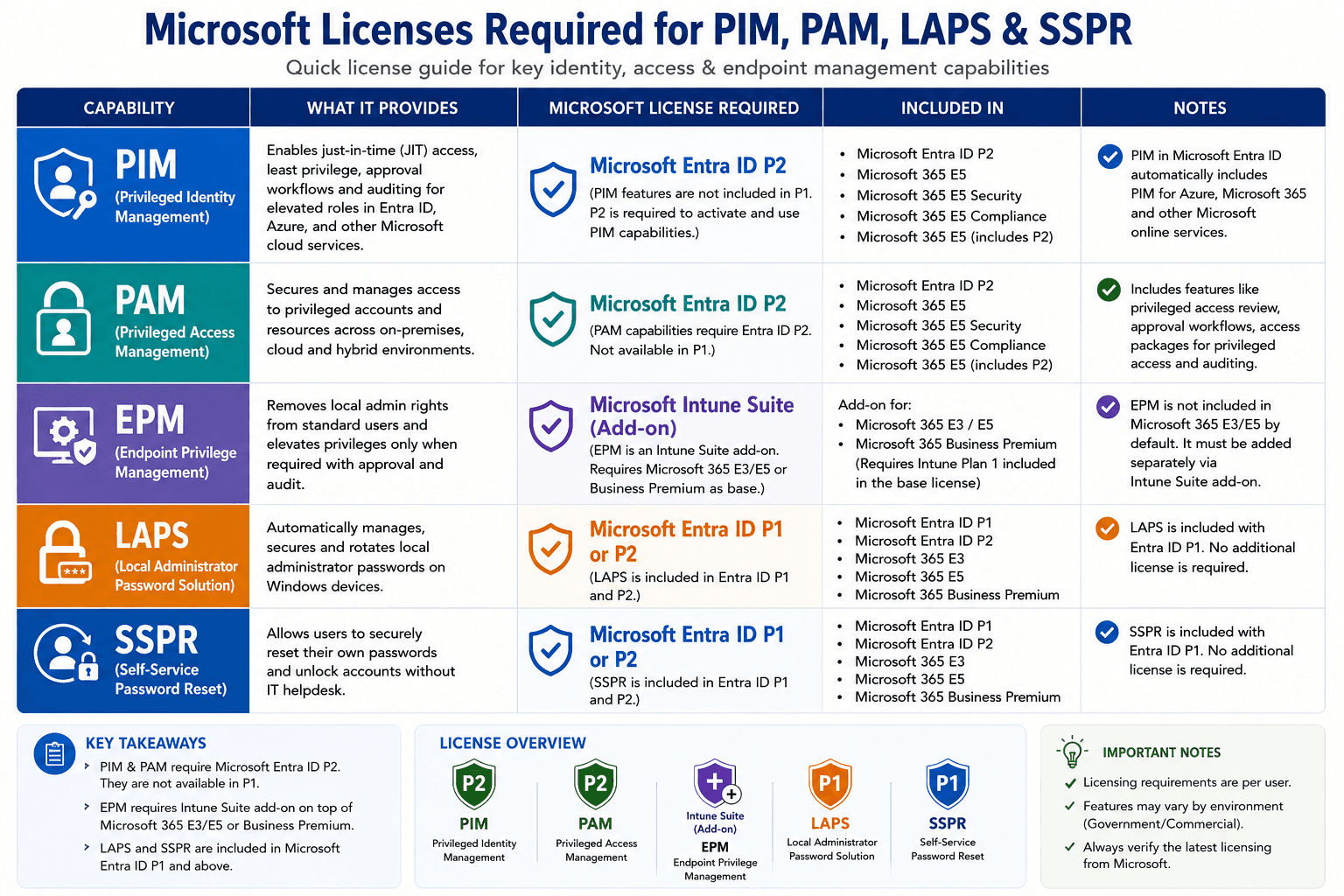
Cut through the Microsoft licensing maze. Understand exactly which license unlocks PIM, PAM, EPM, LAPS, and SSPR, and how P1 vs P2 determines what your organisation can actually do.