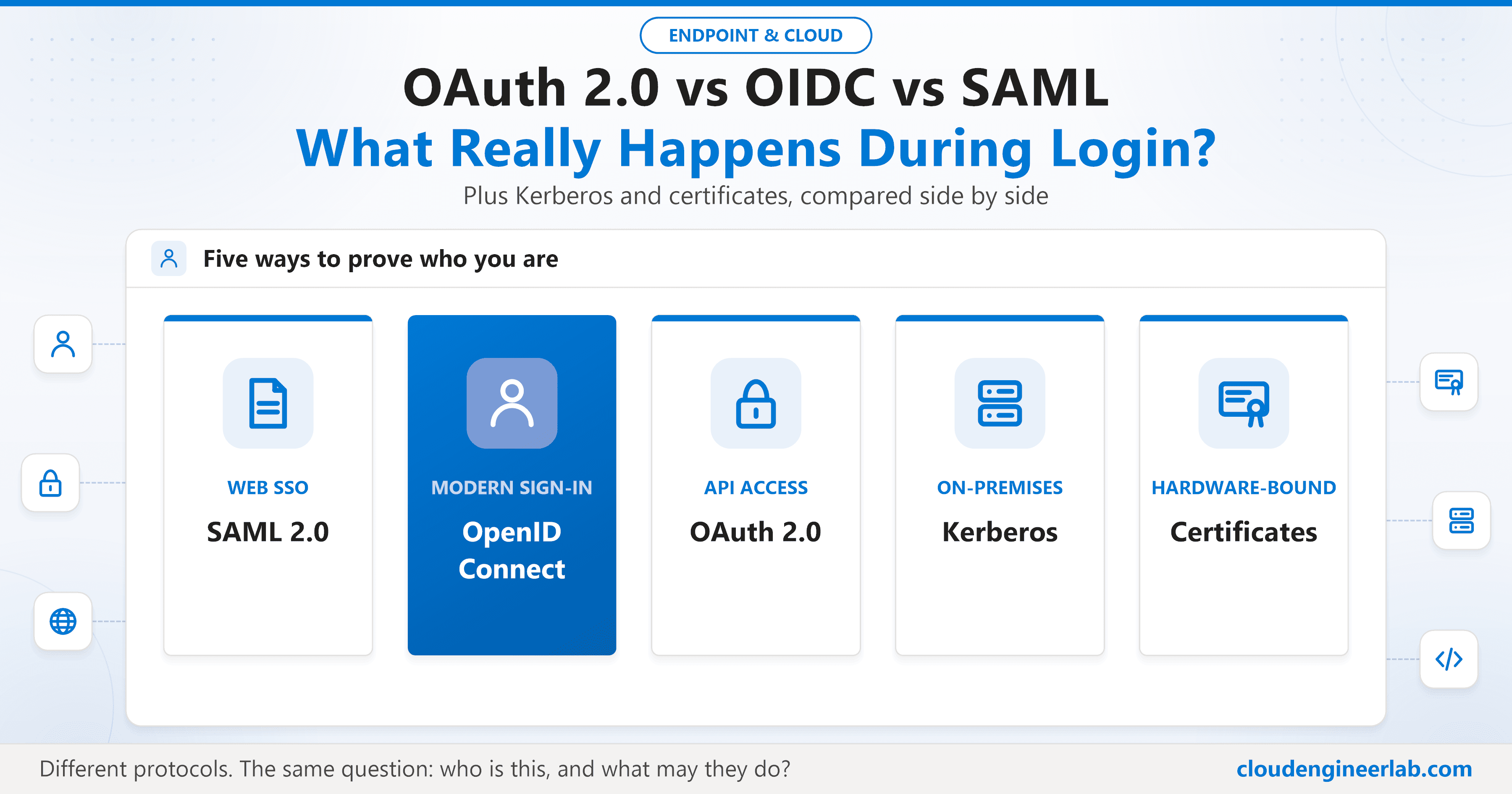
OAuth 2.0 vs OpenID Connect vs SAML: What Really Happens During Login?
Step through a real login with SAML, OpenID Connect and OAuth 2.0, then compare them with Kerberos and certificate authentication, and learn which to use when.
26 posts

Step through a real login with SAML, OpenID Connect and OAuth 2.0, then compare them with Kerberos and certificate authentication, and learn which to use when.

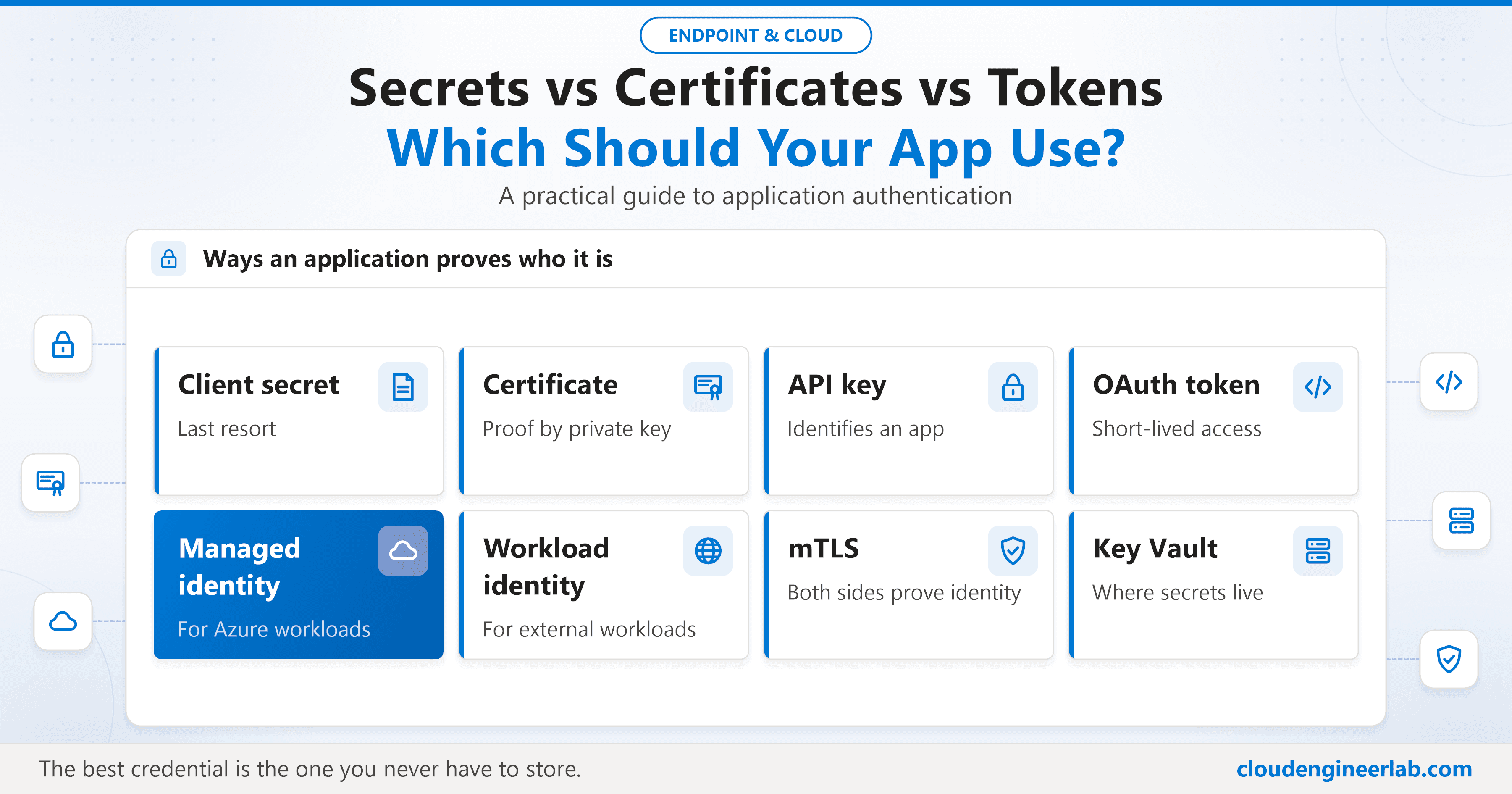
Client secret, certificate, API key, OAuth token, managed identity, workload identity or mTLS? A practical guide to how applications should prove who they are.

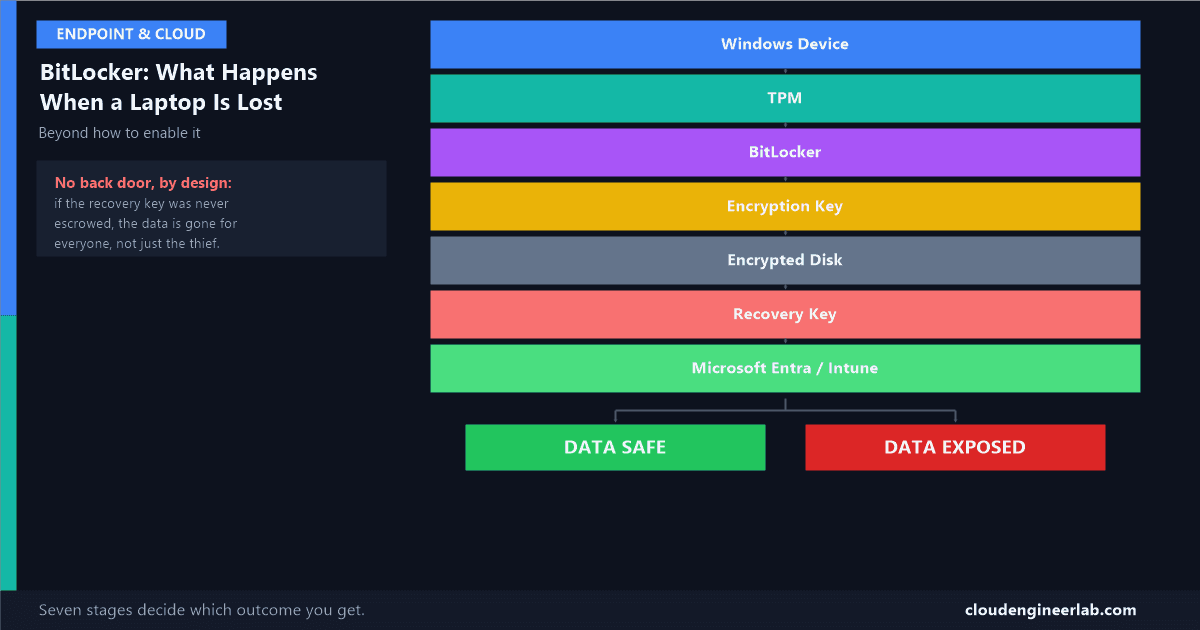
Not how to turn BitLocker on. What actually happens, at the cryptographic level, between a laptop going missing and its data staying unreadable, or not.

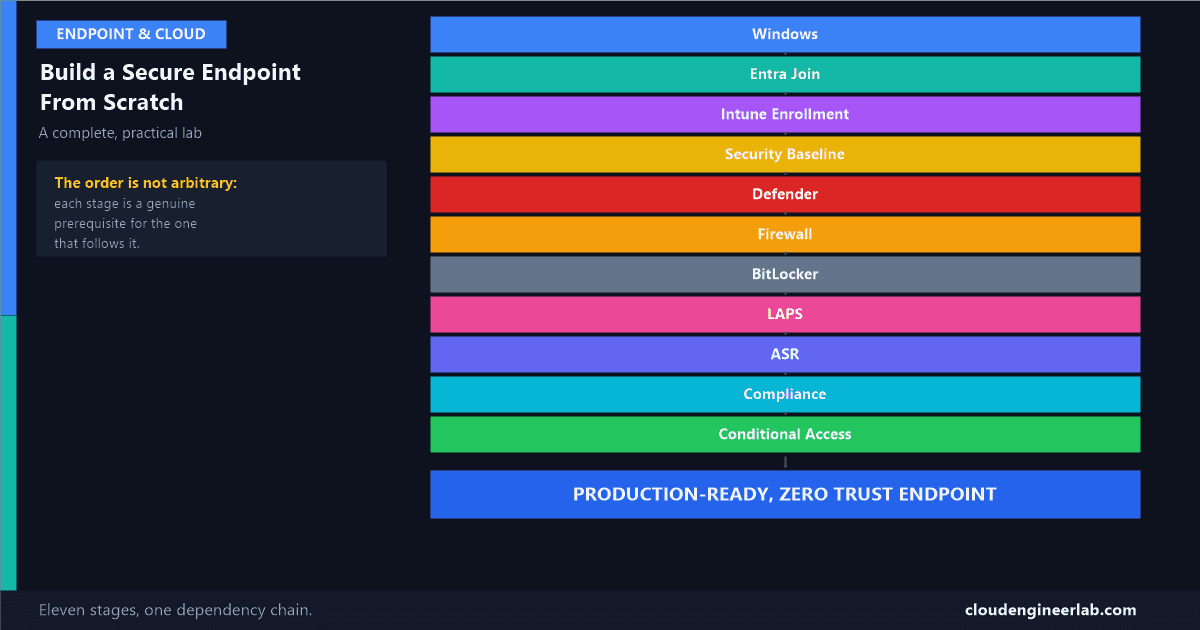
Eleven stages, in the exact order they actually depend on each other, from a blank Windows machine to a fully hardened, Conditional-Access-protected endpoint.

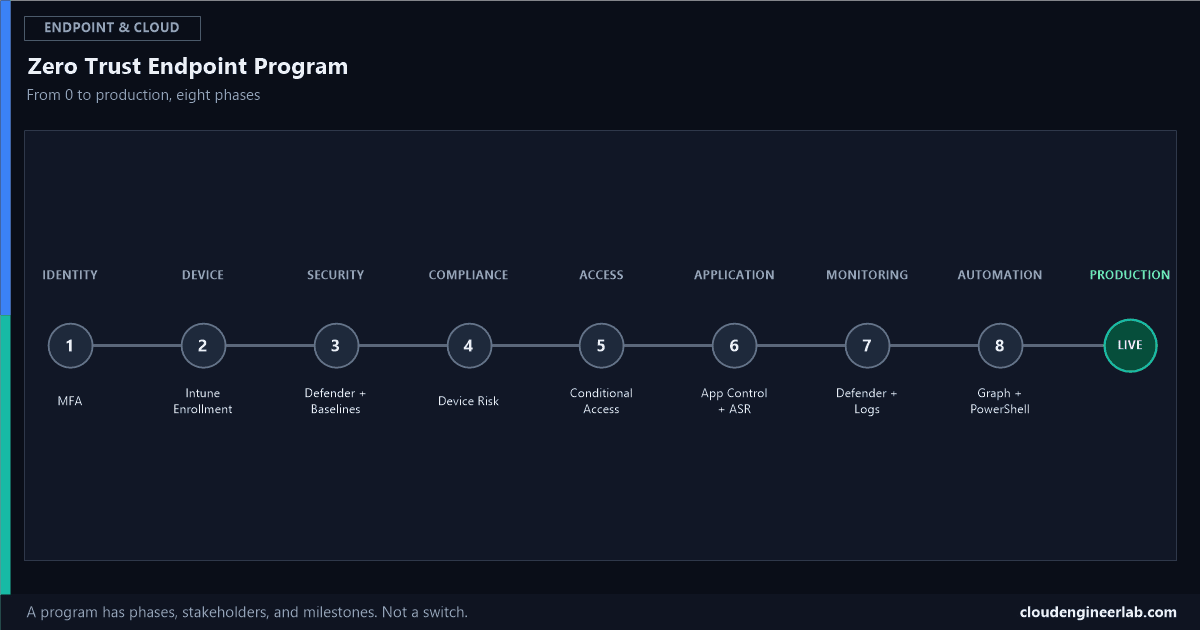
Deploying every control at once produces chaos, not Zero Trust. Eight phases, in the order a real enterprise program actually runs them, with the pitfall at each one.

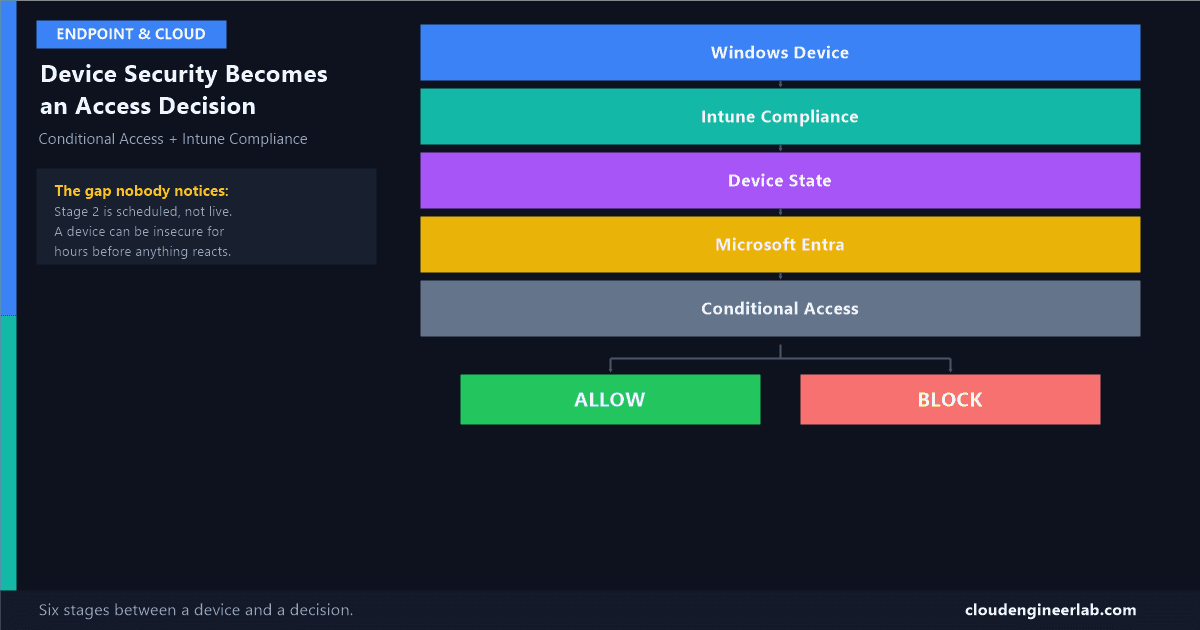
A device isn't just compliant or not. Follow the actual six-stage path a laptop's security state travels before it becomes an Allow or Block.

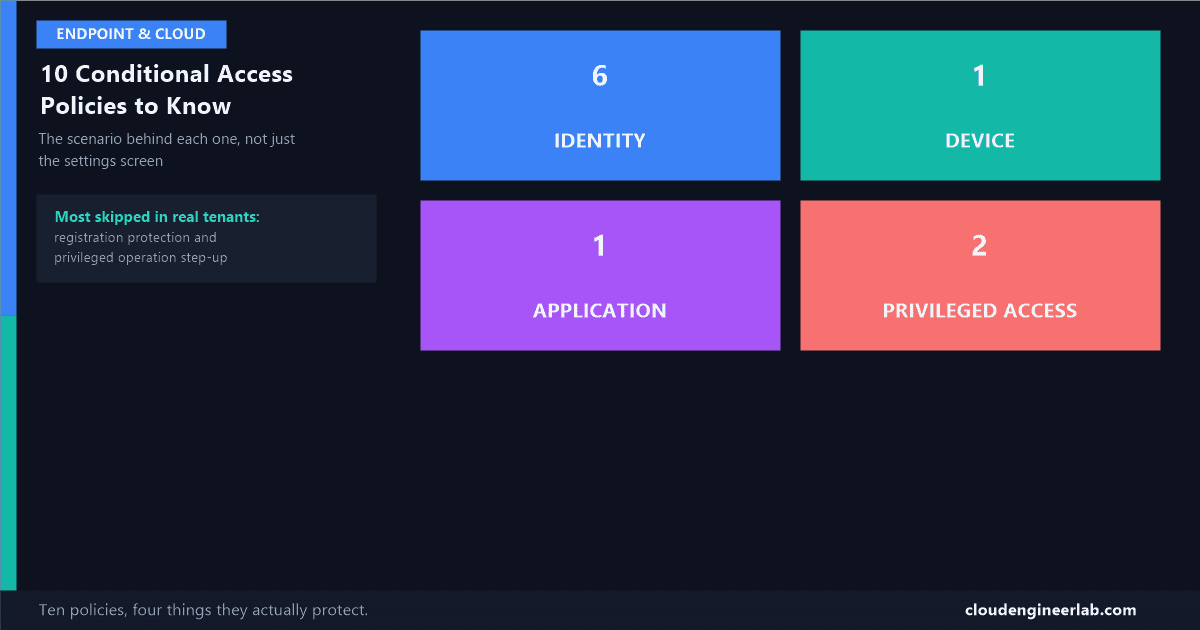
Ten real Conditional Access patterns explained through the actual scenario each one exists to stop, not just the settings screen you'd click through.

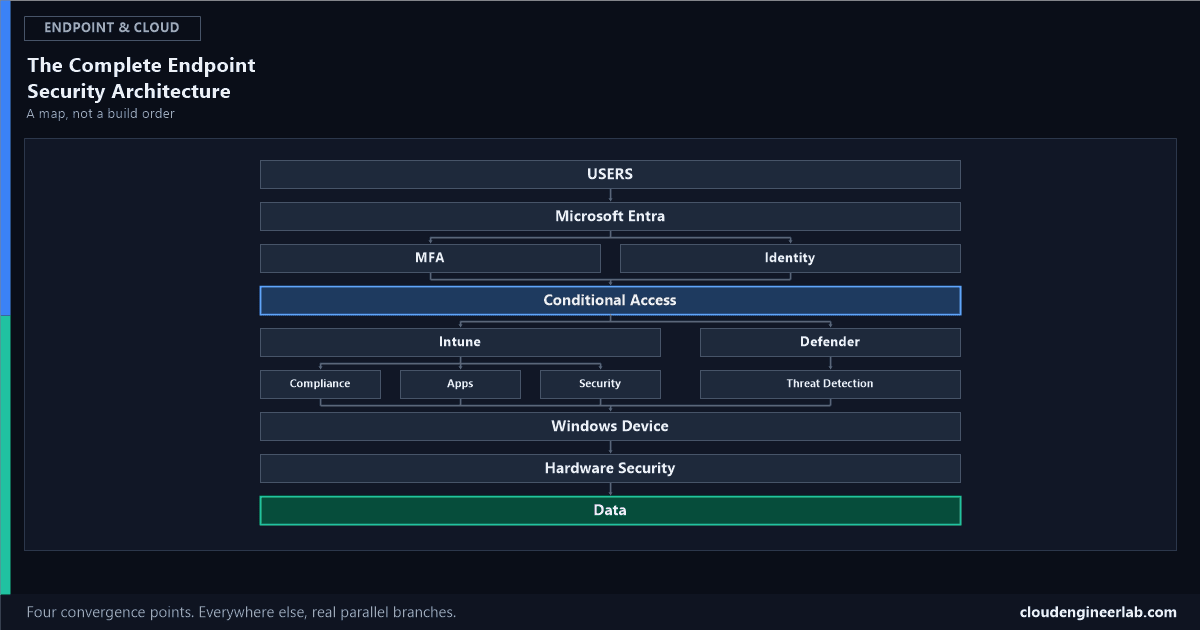
Every product covered on this site, placed on one map, showing exactly what branches in parallel and what has to converge before the next layer can trust it.

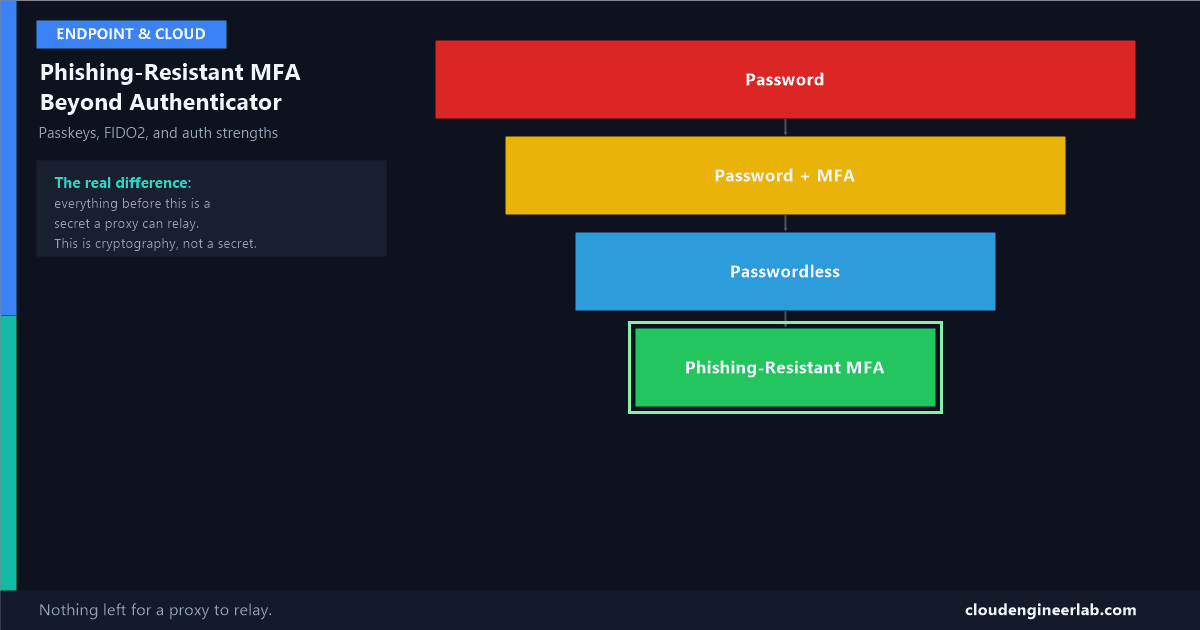
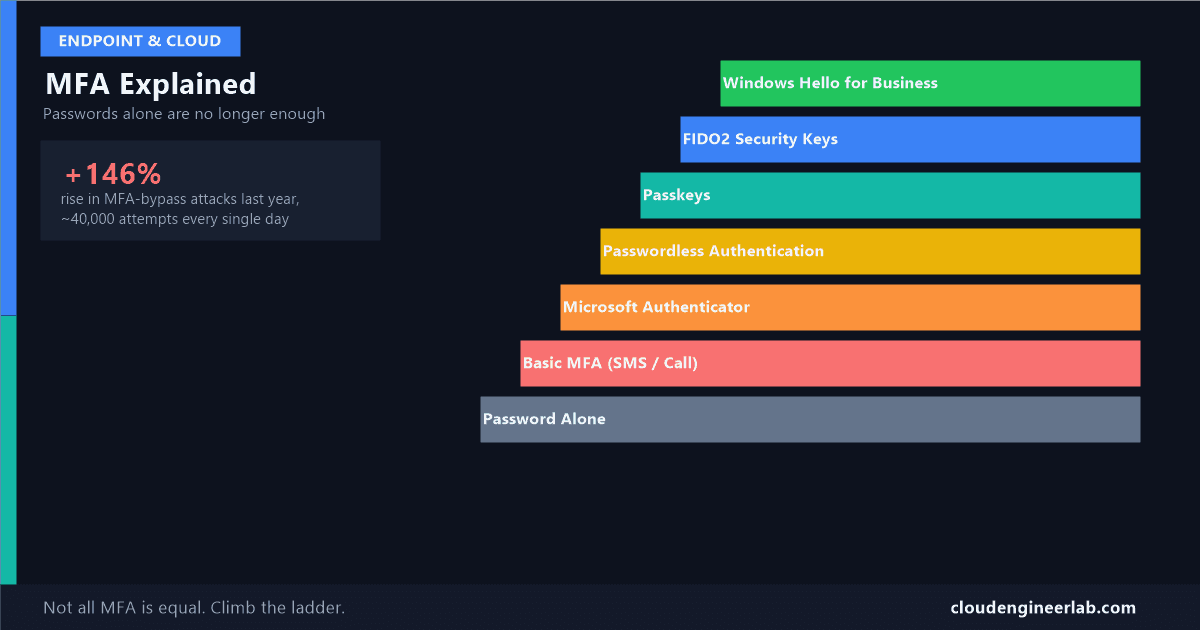
Push notifications and app codes still get phished in real time. Here's how passkeys and FIDO2 close that gap cryptographically, and how to actually enforce it.

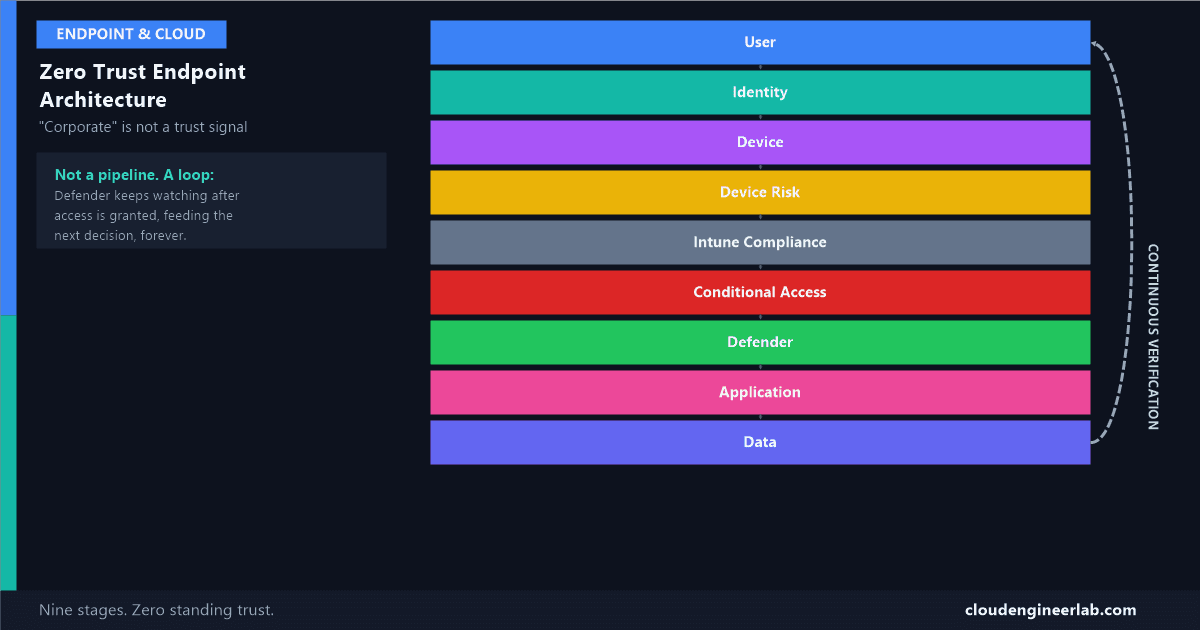
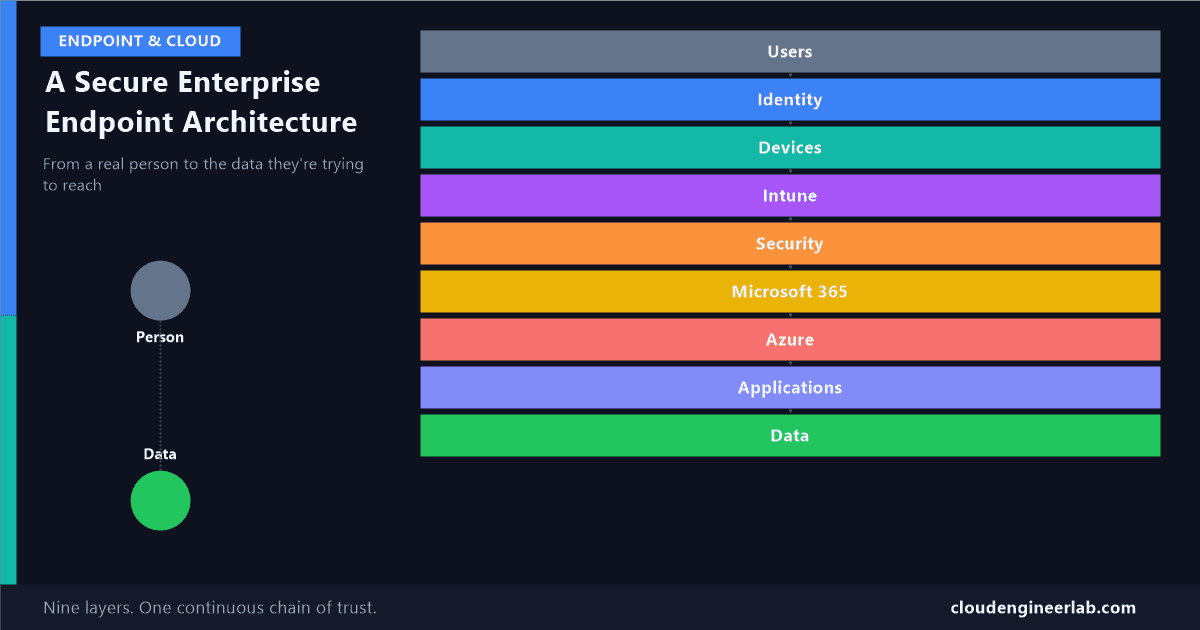
A domain-joined, company-issued laptop is not automatically trustworthy. Nine layers, one continuous loop, and why 'corporate' was never the actual trust signal.

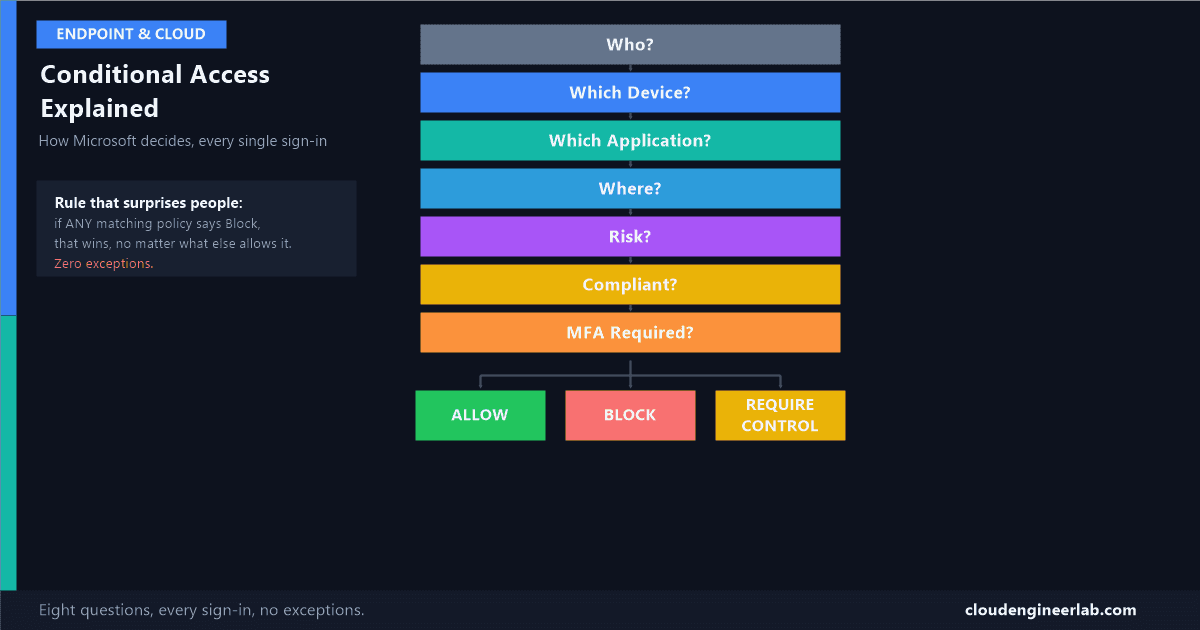
Every sign-in gets asked the same eight questions before Microsoft decides anything. Here's the actual decision engine, walked through with real examples.

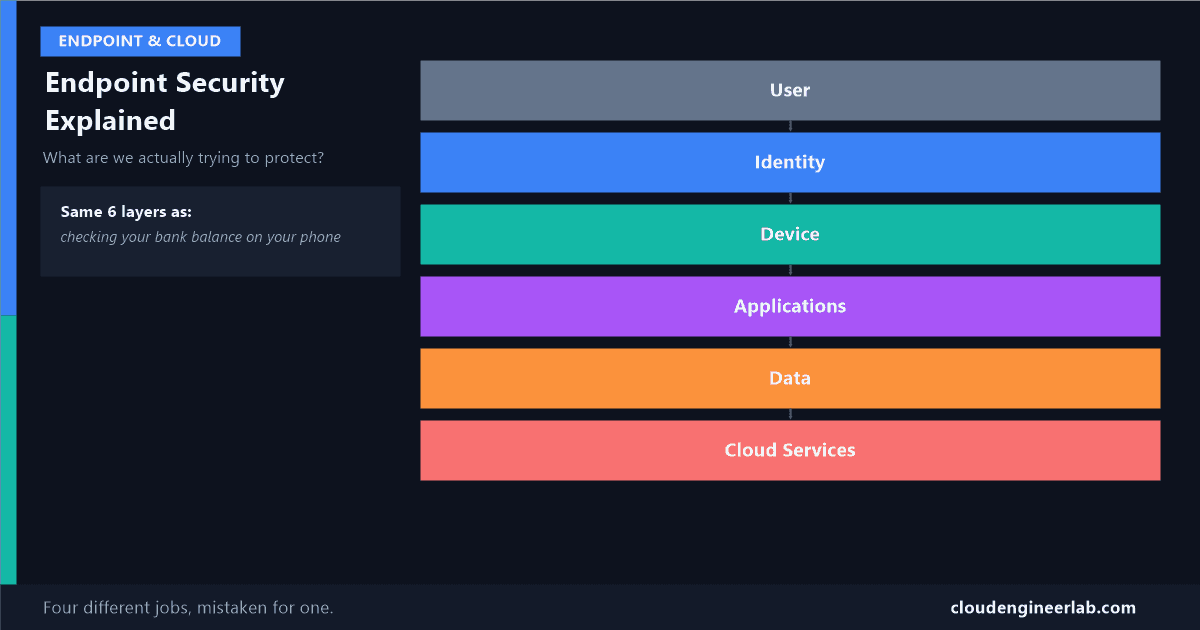
"Endpoint security" sounds like one thing. It's actually four different jobs stacked on top of each other, and mixing them up is how real breaches happen.

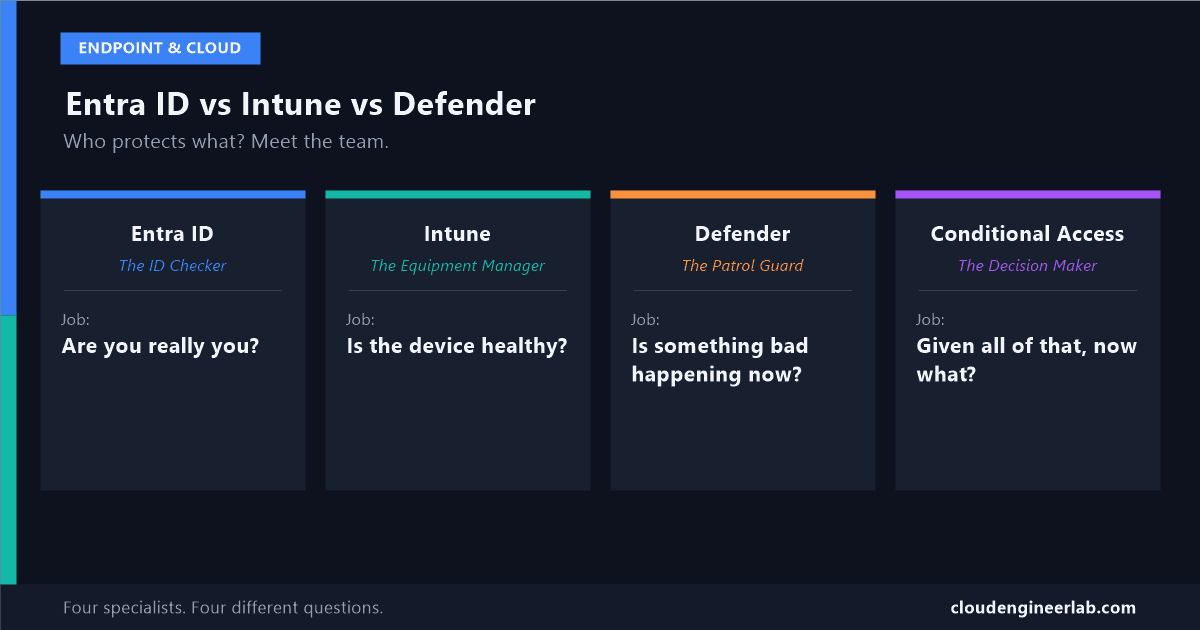
Three products, three different jobs, one common mistake: assuming any one of them alone is 'the security team.' Meet each one and find out who actually handles what.

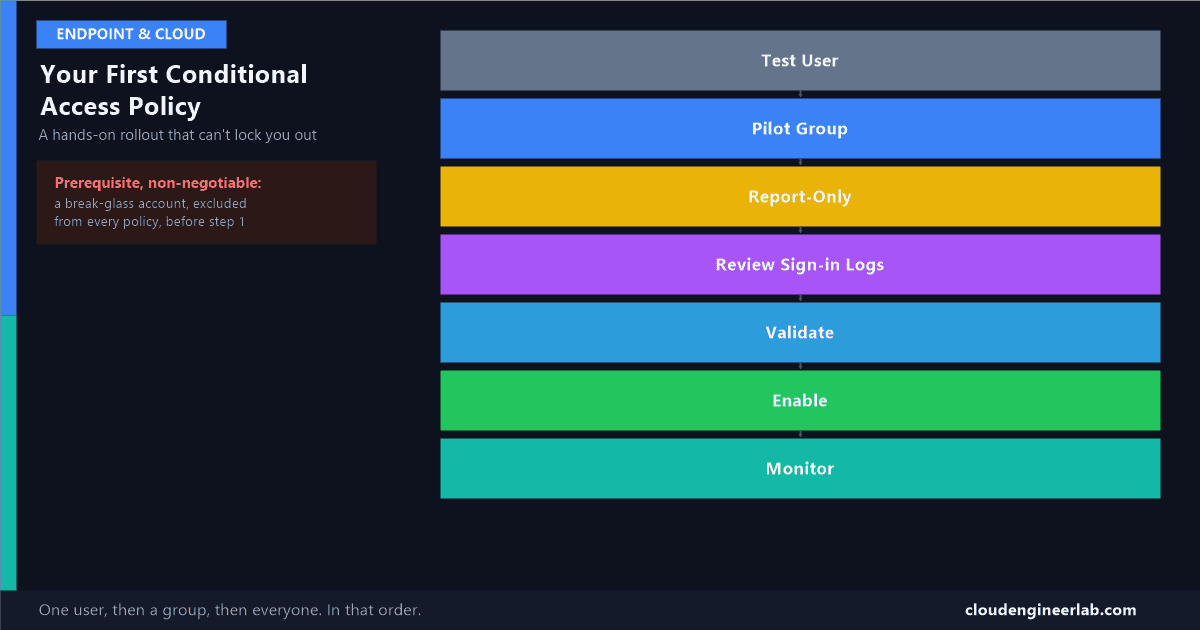
A real, step-by-step rollout, from one test user to full monitoring, built so your first policy can't accidentally lock out the whole organisation.


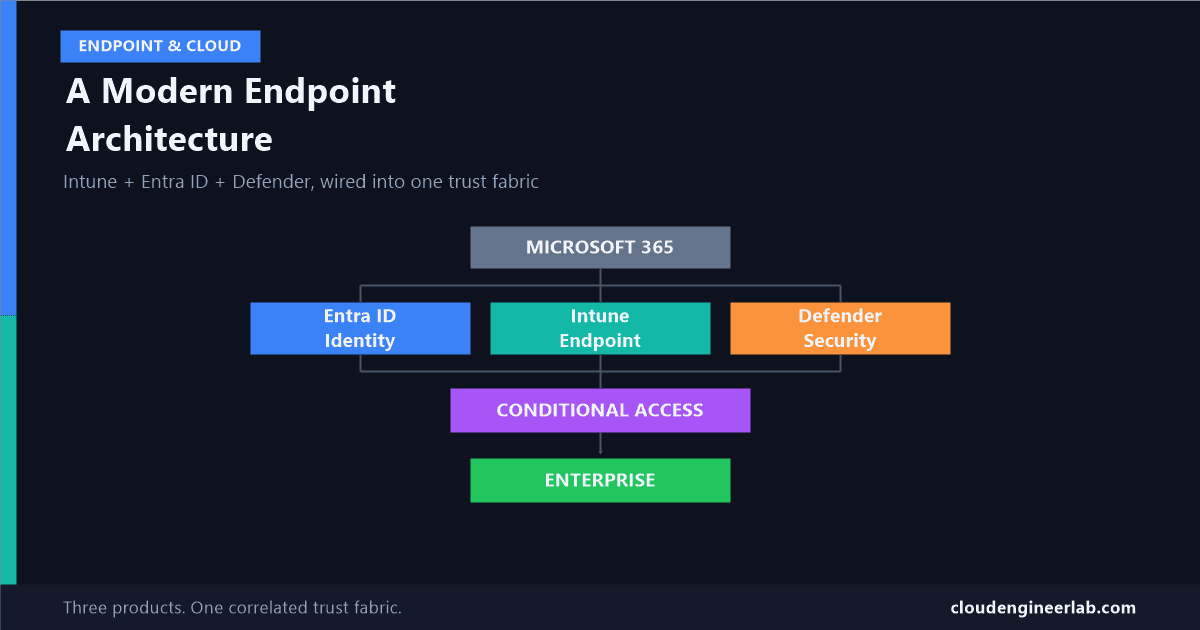
These three products aren't separate tools bolted together, they're one correlated trust fabric. Most tenants deploy all three and never actually wire them into it.

Listing Azure services answers the wrong question. The real one is how trust actually flows from a real person down to the data they're trying to reach.

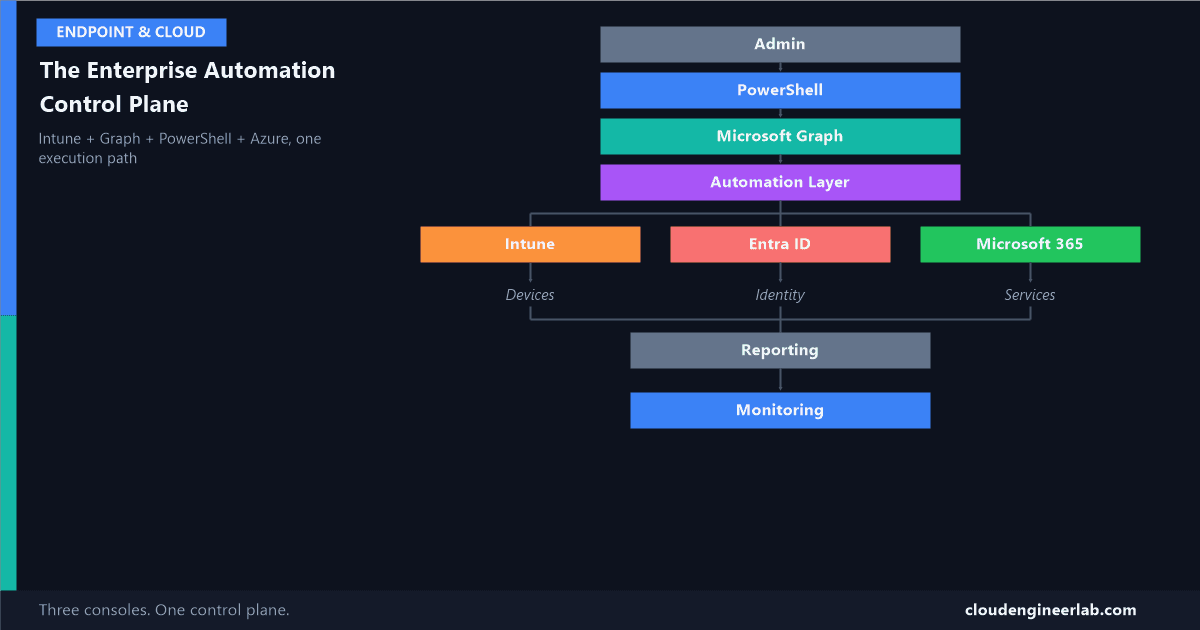
Most tenants run three separate admin experiences, Intune, Entra ID, M365, with three mental models and three audit trails. Here's what replaces all three with one.

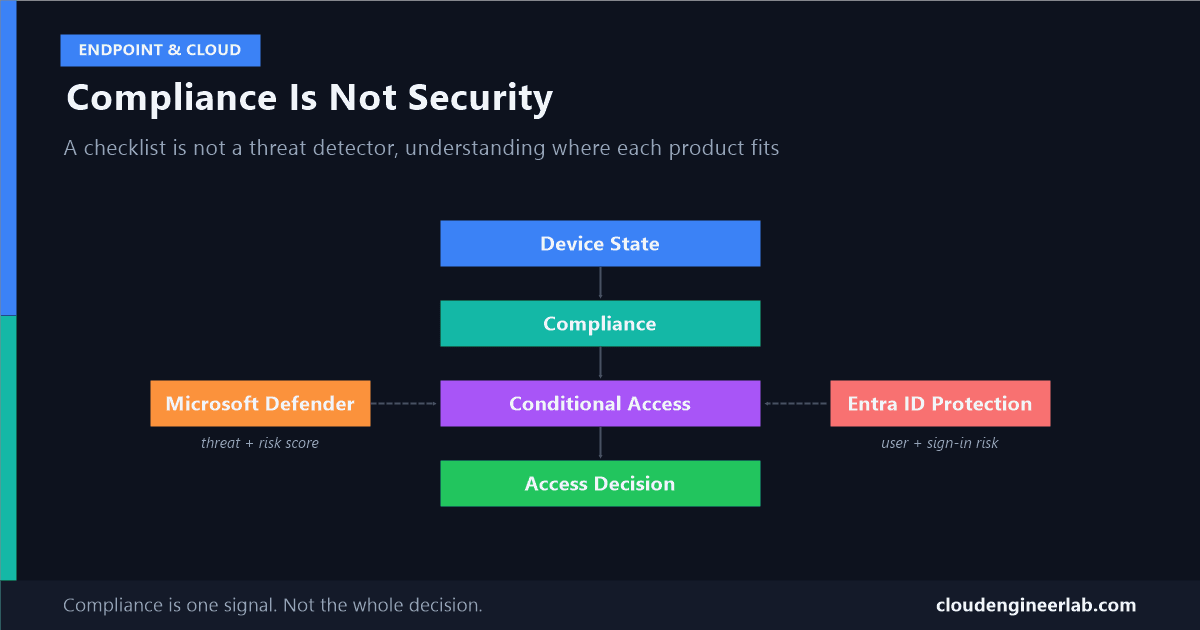
A fully patched, encrypted, PIN-locked device can still be actively compromised. Here's why compliance is a checklist, not a security guarantee, and what actually is.

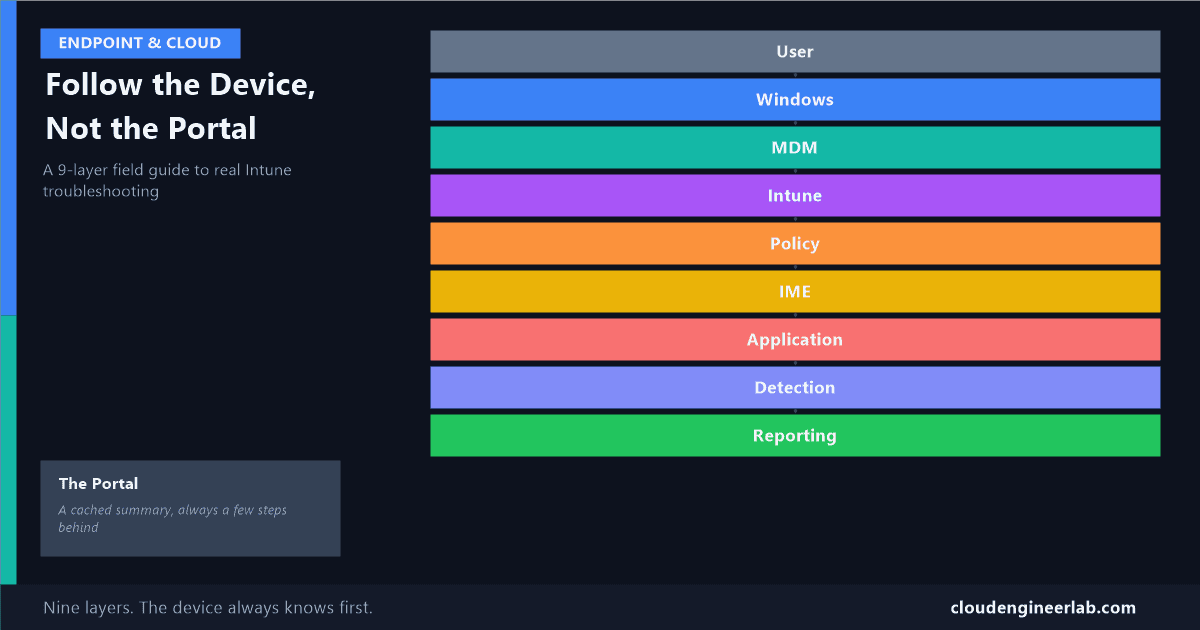
The admin centre is a reported view assembled from several independent systems, each with its own delay. Here's where the actual truth lives, layer by layer.

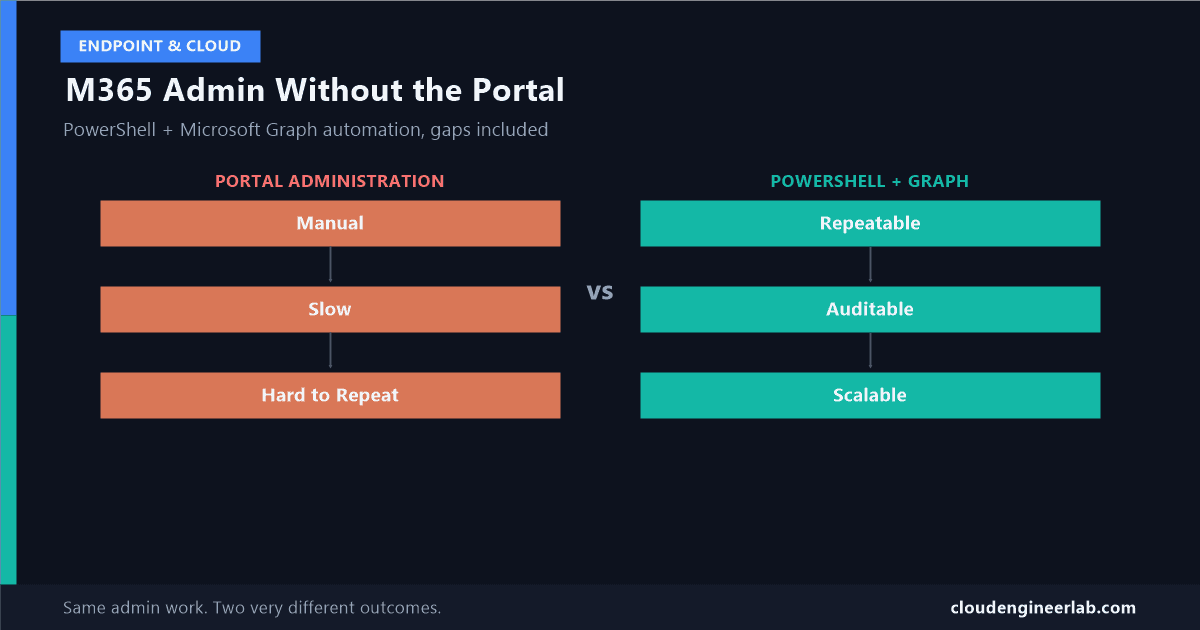
Manual admin work doesn't just cost time, it's unrepeatable by design. Here's what actually changes when you move it to PowerShell and Graph, honestly, gaps included.

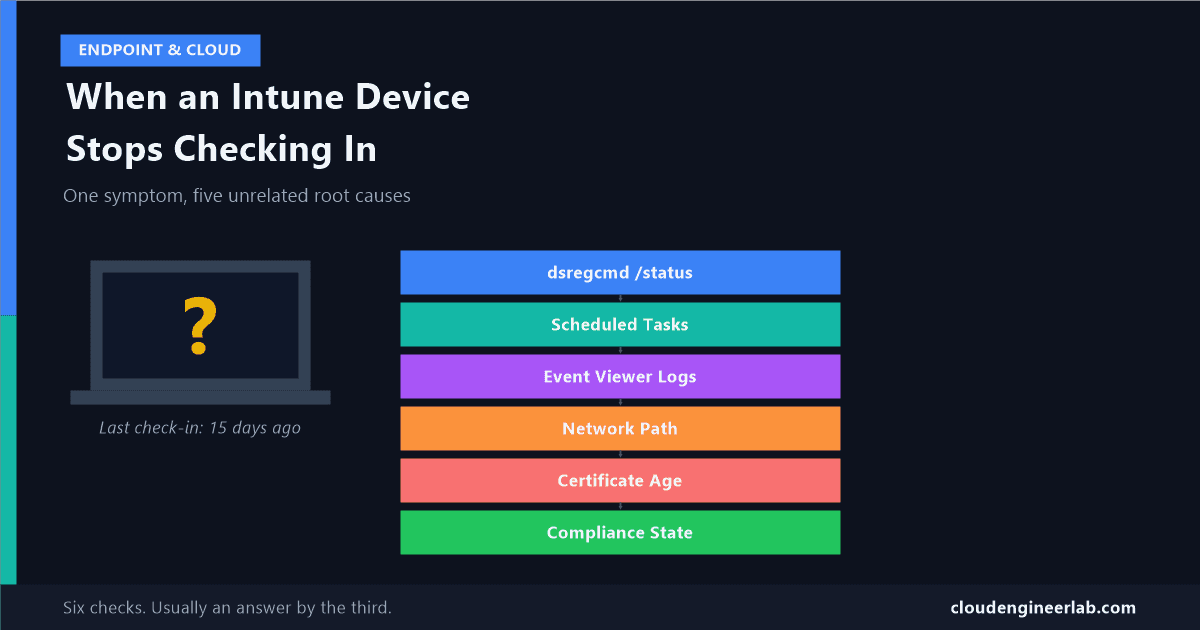
"Hasn't checked in" isn't one problem, it's at least five different problems wearing the same badge. A real diagnostic flow, log by log, command by command.

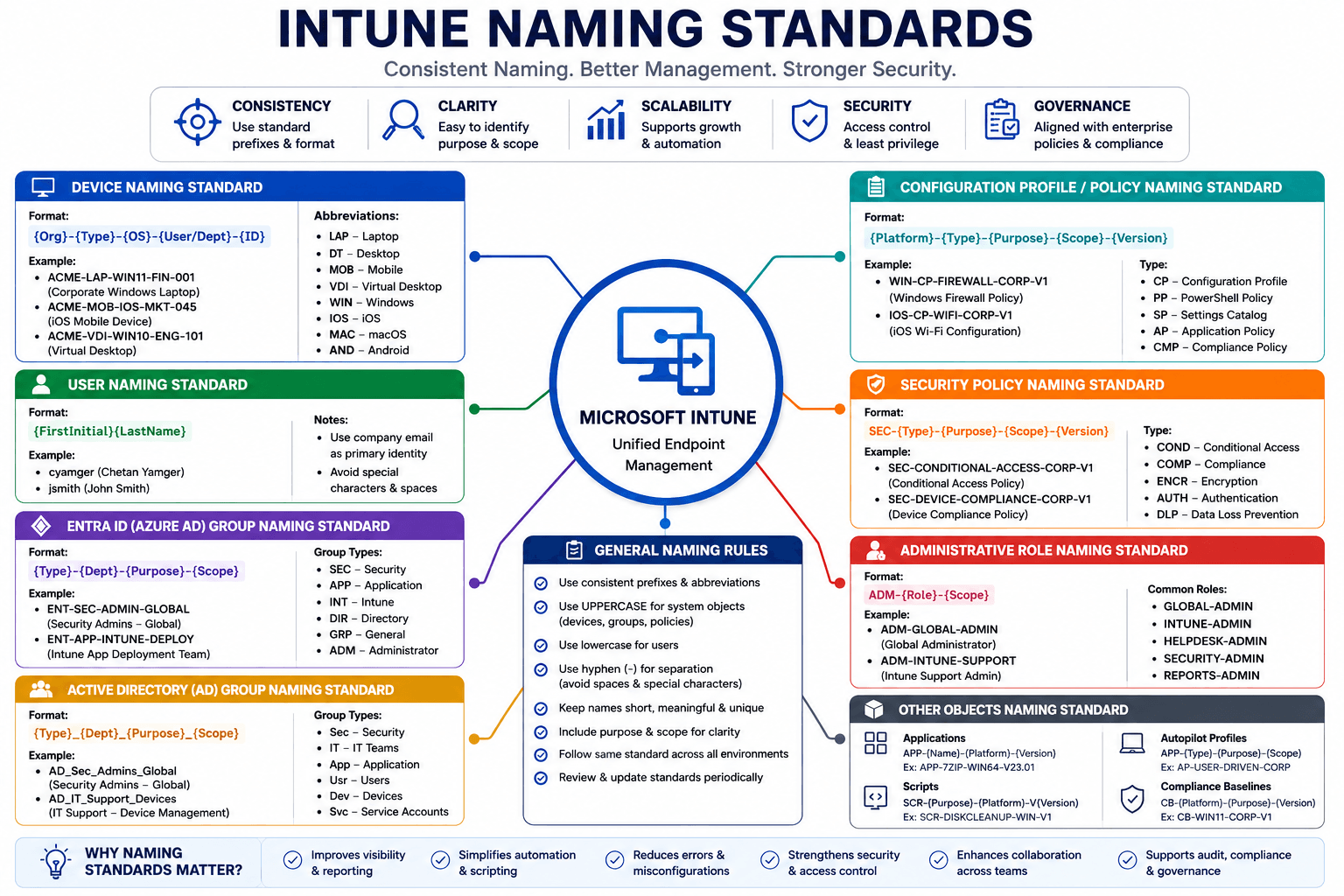
A complete naming convention guide for enterprise IT environments, covering Intune, Entra ID, Active Directory, Conditional Access, Configuration Profiles, Security Policies, Service Accounts, and every object type an admin touches daily.

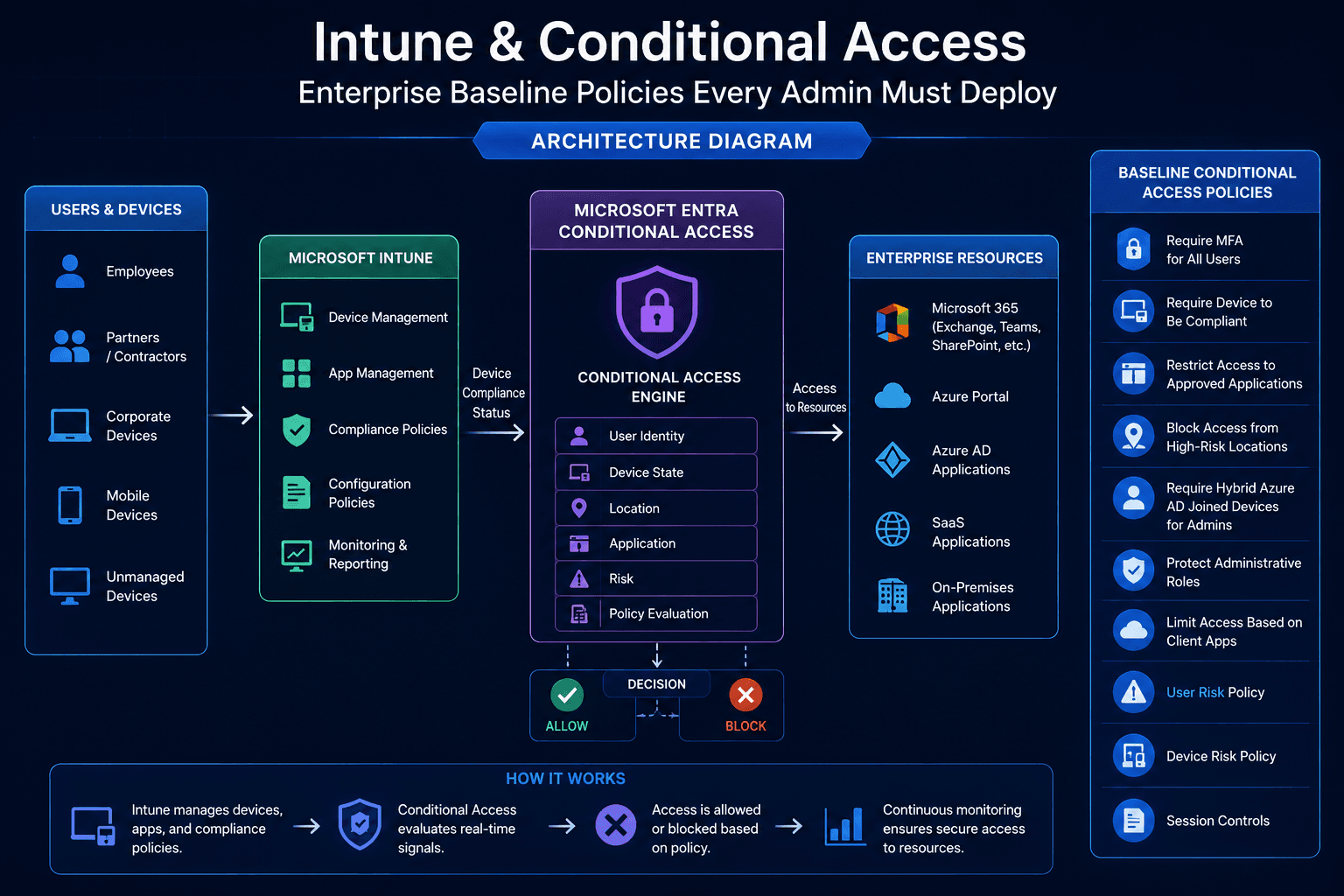
A complete enterprise guide to Conditional Access baseline policies: what to deploy, what to test before you flip the switch, what can go wrong, and why getting this wrong can lock out your entire organisation.

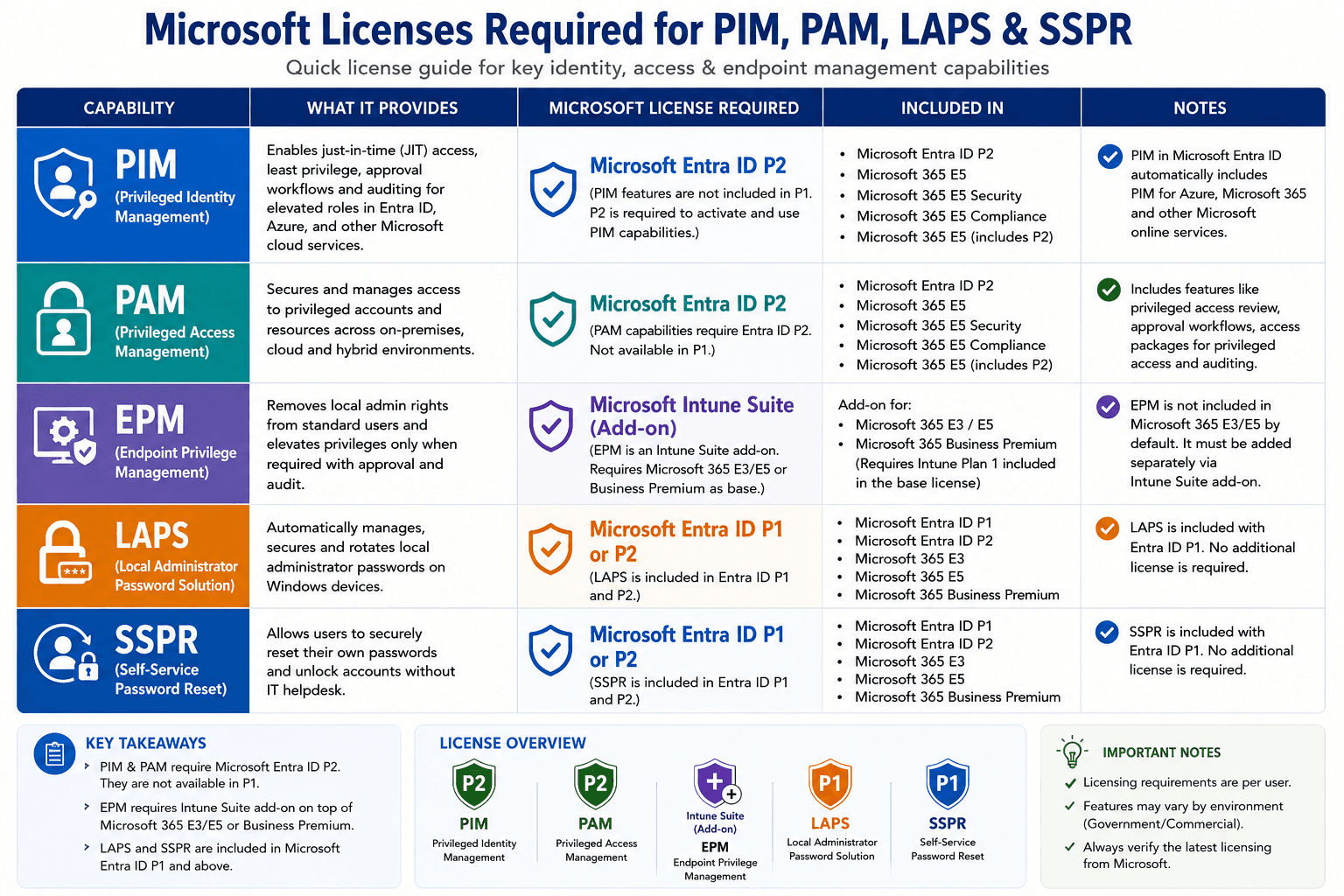
Cut through the Microsoft licensing maze. Understand exactly which license unlocks PIM, PAM, EPM, LAPS, and SSPR, and how P1 vs P2 determines what your organisation can actually do.

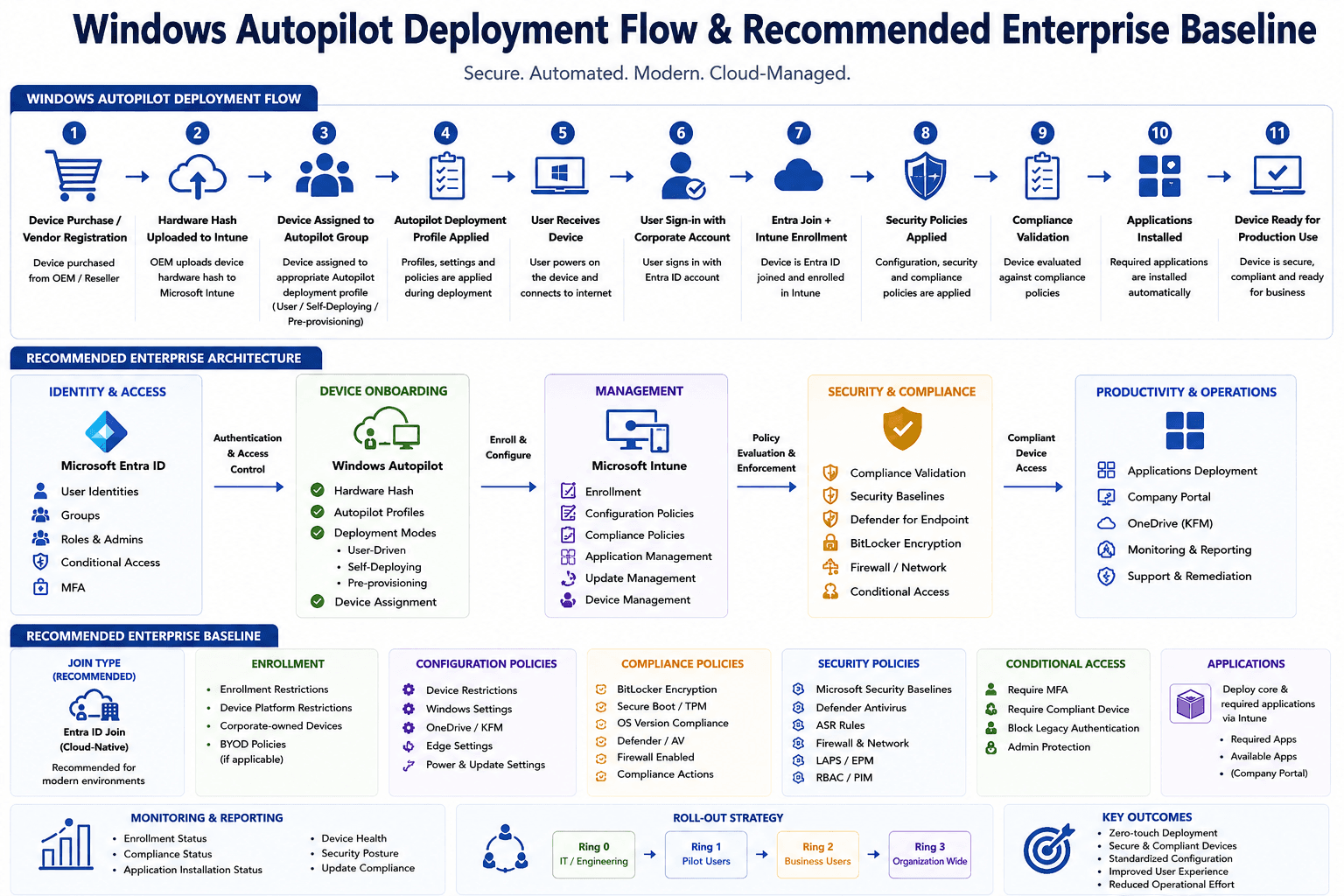
A complete guide to Windows Autopilot: every deployment mode explained, the full provisioning flow step by step, and the enterprise baseline every organisation should build on top of it.